
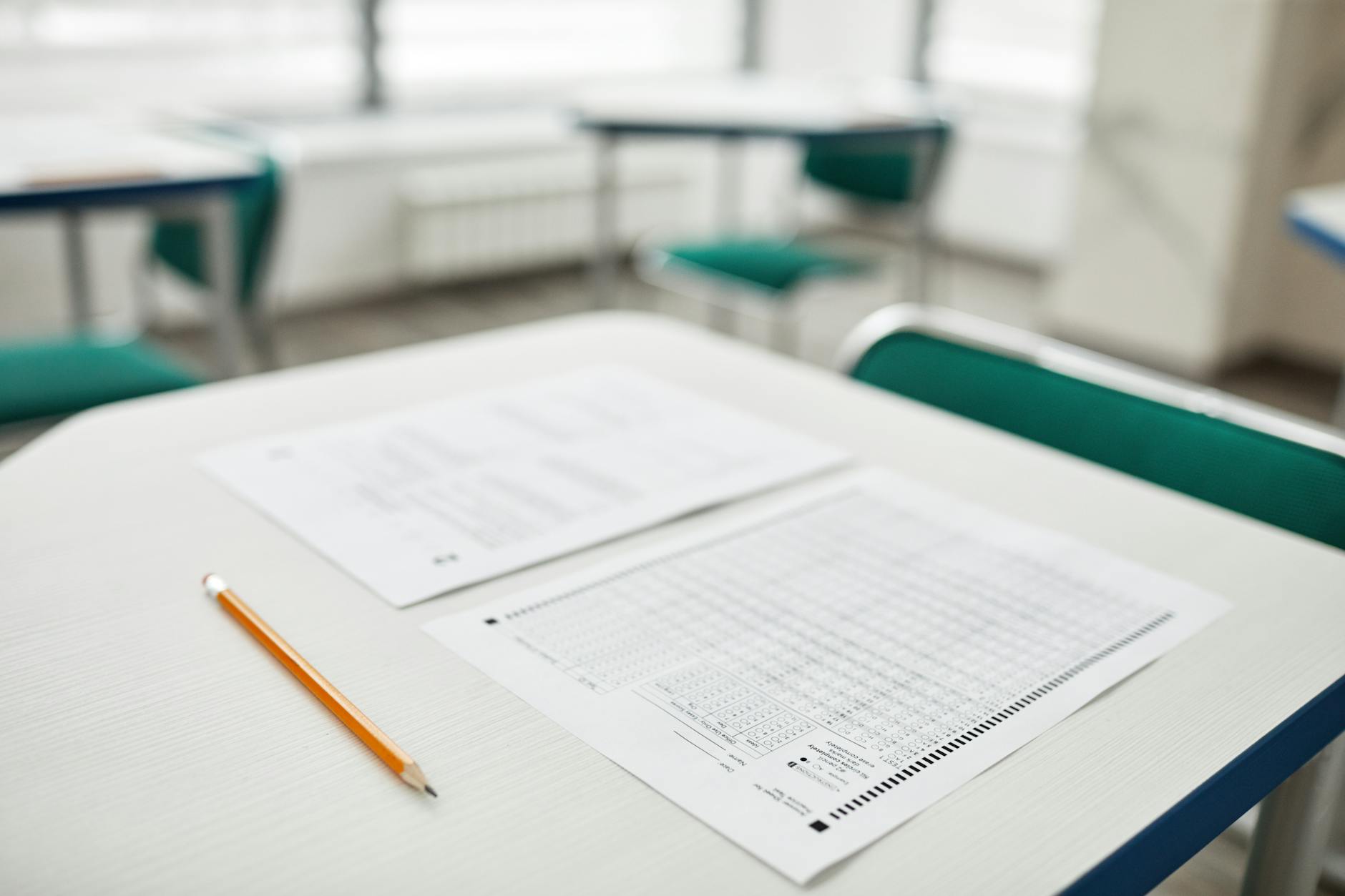
The AP Psychology study guide is a $5 printable PDF built to match the current exam, and it gives you a very quick way to see the whole course. It is 49 pages, starts with the heaviest official units, and includes 273 key terms with examples, 55 practice questions with explanations, common exam traps, a 2-page cram sheet, and 2-, 4-, and 8-week study plans.
You can also try 10 sample questions on the guide page before you buy. If you only need a focused review tool, this guide may be enough. If you want more lessons, more quizzes, and full written-practice tasks, you may want the course or a plan instead.
What the $5 guide includes
The fastest way to judge this product is to look at its parts. The table below shows what is inside the $5 study guide and how each part helps you study.
| What you get | Details |
|---|---|
| Format | Printable PDF, 49 pages, instant download |
| Chapters | One per unit, heaviest-weighted first |
| Key terms | 273, each with an example |
| Practice questions | 55, every answer explained |
| Exam traps | Common wrong-answer traps flagged |
| Cram sheet | 2 pages for the night before |
| Study plans | 2-, 4- and 8-week plans built from the exam weights |
| Try first | 10 free sample questions on the guide page |
| Price | $5, one-time |
What matters most is how compact it is. You are not buying a huge textbook or a long video course. You are buying one printable PDF, 49 pages total, built from the official units and weights. That makes it useful when class notes are messy, or when you want one packet you can mark up.
The guide gives you one chapter per official unit, with the heaviest-weighted units first. It also includes 273 key terms, and each term comes with an example. That matters in psychology because many terms sound familiar until you have to apply them in a question.
You also get 55 practice questions, and every answer is explained. The guide flags common exam traps too, which is helpful on a test with 75 multiple-choice questions worth 66.7% of the score. Last, it includes a 2-page cram sheet for the night before, plus 2-, 4-, and 8-week plans built from the exam weights.
Before buying, you can try the 10 sample questions on the guide page. That is a good check if you want to see the writing style before spending $5.
Why the guide starts with the heaviest units
AP Psychology is now built around five units, and each one carries the same published range: 15% to 25%. The guide still puts the heaviest-weighted content first because the official weighting is a range, not a fixed equal split, and because some students need to front-load the biggest tested ideas first.
| # | Unit | Share of exam |
|---|---|---|
| 1 | Biological Bases of Behavior | 15%–25% |
| 2 | Cognition | 15%–25% |
| 3 | Development and Learning | 15%–25% |
| 4 | Social Psychology and Personality | 15%–25% |
| 5 | Mental and Physical Health | 15%–25% |
The main point for you is simple: the guide is not arranged like a random set of notes. It follows the official unit structure, so your review lines up with how the exam is written. Those five units are Biological Bases of Behavior, Cognition, Development and Learning, Social Psychology and Personality, and Mental and Physical Health.
That fit matters even more now because the current format, used since May 2025, has 75 multiple-choice questions, one Article Analysis Question, and one Evidence-Based Question. The old 100-question format no longer applies. So if you are using old hand-me-down notes or older online material, check that it matches the current exam.
The guide is strongest when you need targeted review by unit. If your class is already teaching the content and you mainly need a clean study tool built from the official units and weights, that is where it shines. It helps you spend time in the same buckets the exam uses, instead of guessing what matters most.
The AP Psychology study guide: $5, instant PDF
49 printable pages built from the official units, heaviest first: 273 key terms with examples, 55 practice questions with every answer explained, a 2-page cram sheet and 2-, 4- and 8-week study plans. Try 10 free sample questions on the page first.
See the AP Psychology guide →How the terms, examples, and questions help
Psychology is full of terms that seem easy until two answer choices look almost the same. That is why the guide's 273 key terms matter. Each one comes with an example, which turns a definition into something you can recognize in a question.
For many students, that is the difference between reading a term and actually knowing it. A plain definition can feel fine during review. An example forces you to see how the idea shows up in behavior, research, learning, memory, health, or social settings.
The 55 practice questions help in a different way. Since every answer is explained, you are not left wondering why one choice was right and the others were wrong. That is useful for the 75 multiple-choice questions, which count for 66.7% of your score. It also helps with the written tasks because weak term knowledge shows up there too.
If you want extra practice before buying, try the free practice test. It has 25 original questions that follow the official course units and weights, and a free account shows your score and explanations.
If you also want a rough score estimate after you practice, you can use the free AP score calculator. It gives an estimated 1 to 5 score, not an official conversion. Colleges set their own AP credit policy, so always check your school's rules.
Who should use the guide alone, and who should not
The AP Psychology study guide works best on its own for a certain kind of student. It fits you well if you already learned most of the course in class, have your own notes, and mostly need review, practice, and a tighter plan. It also fits if you are close to test day and want one small packet you can print, mark up, and carry around.
The 2-page cram sheet and the 2-, 4-, and 8-week plans are strong signs that this guide is for focused review. It is not trying to be a full class. It is trying to help you review the right material in the right order.
You should probably add the $19 prep course if you still need teaching, not just review. The course has 15 chapters, 87 lessons, 89 quizzes, 15 interactive labs, plus a timed final practice exam and a final exam, each with a written part and a scoring guide. It is built for the May 2027 exam.
A simple price check helps here. Guide only is $5. Guide plus course is $24. If you want one subject and you know AP Psychology is your main need, that is an easy buy. If you need prep across several AP subjects, start comparing plans instead of buying item by item.
You can browse other AP options on the AP prep hub page.
When a plan makes more sense than one subject
A plan makes sense when AP Psychology is not your only exam. The key thing to know is this: AP Monthly and AP Lifetime include all 42 AP study guides and 36 AP prep courses. So if you want many AP subjects, a plan may save money compared with buying one subject at a time.
AP Monthly is $29 a month and includes all 42 AP study guides and 36 AP prep courses. AP Lifetime is $149 once and includes all 42 AP study guides and 36 AP prep courses for good. If you need just AP Psychology, buying the $5 guide and the $19 course separately is $24. If you want prep for more than one AP subject, a plan may be the simpler choice. The All-Access Bundle is the bigger option if you also want CLEP and DSST, with every CLEP and DSST prep course, 36 AP prep courses and every AP, CLEP and DSST study guide, for life.
Every plan also includes access to UPI Study's 90+ ACE and NCCRS courses for the time the plan states. Single $5 guides and single $19 courses do not include that.
You can compare the AP plans page or go straight to plans and pricing page if you are choosing between one subject and a bigger package.
Remember, plans cover prep only. Exam fees are separate when you register. AP exams are given once a year in the first two weeks of May, and the exam fee is $99 in the U.S., U.S. territories and Canada, or $129 outside the U.S.
Frequently Asked Questions about AP Psych Prep
It is a 49-page printable PDF. That makes it short enough to review quickly, but still long enough to cover all five official units, key terms, practice questions, exam traps, the cram sheet, and the study plans.
The guide has one chapter for each official unit: Biological Bases of Behavior, Cognition, Development and Learning, Social Psychology and Personality, and Mental and Physical Health. It is built from the official units and weights, with the heaviest-weighted chapters first.
The guide includes 55 practice questions, and every answer is explained. You can also try 10 sample questions on the guide listing before you buy, and there is a separate free practice test with 25 original questions.
It can be, if you already learned most of the course and mainly need review. If you still need more teaching, quizzes, labs, and written-practice tasks, the $19 prep course is a better fit to add.
Yes. AP Monthly and AP Lifetime include all 42 AP study guides and 36 AP prep courses. If you only need one subject, the AP Psychology prep course is also sold separately for $19.
It can help you prepare, but no prep product can promise credit. AP scores run from 1 to 5, and each college decides its own policy for AP credit, including what score it needs and what credit it gives.
Final Thoughts on AP Psych Prep
If you want a low-cost review tool, start with the $5 study guide. It is the better choice when you already know most of the course and want a printable guide built from the official units and weights. If you still need fuller teaching and more practice, add the $19 prep course. Your next step is simple: try the 10 sample questions on the guide listing, then decide if the guide, the guide plus course, or an AP plan fits how many subjects you need.
Start your AP Psychology prep today
$5 study guide · $19 prep course · AP Monthly $29 a month (every AP guide and 36 AP prep courses)