
1 semester of Chemistry I usually does include stoichiometry and thermodynamics, and that surprises people who expect only memorizing the periodic table. A real first chemistry course covers how atoms behave, how equations balance, how much reactant you need, and why some reactions give off heat while others absorb it. That mix matters because science programs build later work on these ideas, not on random facts. Most schools treat Chemistry I as the foundation course for 2 big jobs: reading matter at the atomic level and doing math with reactions. You see atomic structure, periodic trends, bonding, chemical reactions, stoichiometry, and basic energy ideas in the same course because each one feeds the next. If a syllabus leaves out one of those pieces, the course usually runs lighter than a standard general chemistry class. Reality check: The hard part is not the names of the topics. The hard part is the math language under them. A student who can balance equations and use mole ratios usually feels fine by week 4 or 5, while someone who skips that part gets stuck fast when the lab starts asking for calculated yields or heat changes. A 16-week semester can move quickly. A homeschool senior taking 3 science classes in the same year, or a working adult with 5 study hours a week, needs to check the course outline early and not guess from the course title alone.
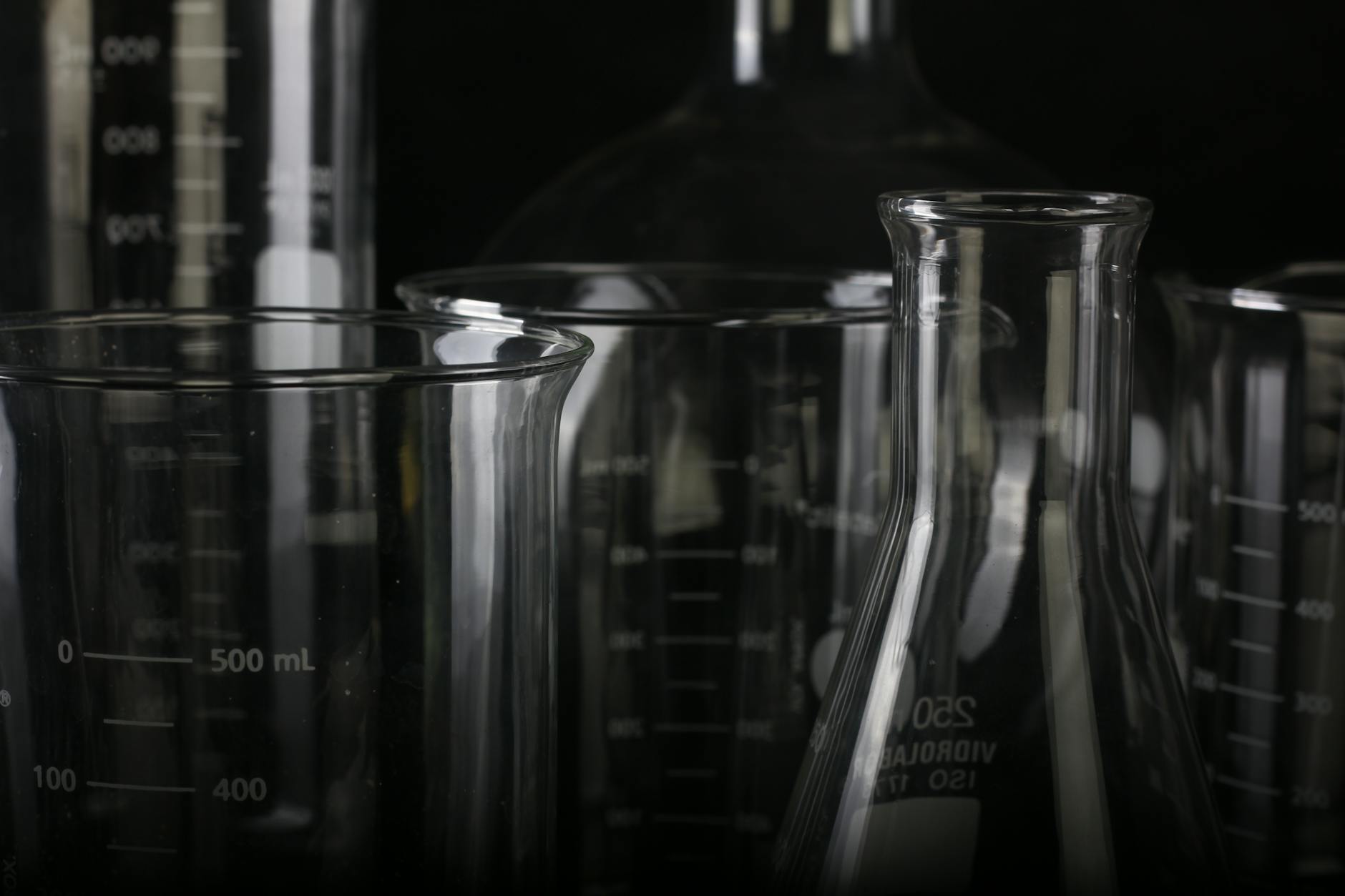
What Chemistry I Usually Covers
Chemistry I usually starts with atomic structure, the periodic table, and how electrons shape behavior in 1st-semester general chemistry. That means atoms, ions, isotopes, electron shells, and periodic trends like radius and electronegativity. If a course skips those first 3 units, it often cannot support the rest of the semester.
Bonding comes next in most 14-16 week schedules. Students learn ionic, covalent, and metallic bonding, plus Lewis structures, molecular shape, polarity, and intermolecular forces. Those topics sound small, but they explain why water boils at 100°C and why salt behaves nothing like sugar.
What this means: A course that spends 2 weeks on bonding is not wasting time. It is building the rules you need before you start reaction math, and you should look for those weeks in the syllabus instead of trusting the catalog blurb.
Chemical reactions usually show up with balancing, reaction types, and prediction of products. Then stoichiometry appears, followed by gas laws, solutions, and basic thermodynamics in many schools. Some colleges place calorimetry and enthalpy in the first term; others move more energy work into Chemistry II, especially if the first course runs as a 4-credit lecture-lab combo.
A 35-year-old paramedic taking Chemistry I after night shifts has 6 hours a week, not 20, so the course map matters. If that student sees atomic structure in weeks 1-2, bonding in weeks 3-4, reactions in weeks 5-6, and stoichiometry right after, the study plan should follow that order. If the lab manual asks for 3 significant figures and mole conversions by week 7, the student needs to drill calculations before the first exam, not after it.
Bottom line: A standard Chemistry I course is not a vocabulary tour. It is a chain of ideas, and the chain usually runs from atoms to bonds to reactions to measurement.

Where Stoichiometry Fits In
Stoichiometry sits near the center of Chemistry I, not on the edge. It uses the mole concept, balanced equations, molar mass, and mole ratios to answer questions like how much product forms from 2.50 moles of reactant. That is why most professors teach it after basic reaction writing and before the tougher parts of solutions or gases.
Balancing equations matters first because the numbers in the equation set the whole calculation. If a reaction has a 2:1 ratio, you do not get to guess a 1:1 answer. A student who treats the coefficients as decoration usually loses the next 3 units of the course, because every quantitative reaction problem depends on them.
The catch: The topic looks like pure math, but it really tests whether you can read chemistry like a sentence. If the equation is wrong, the answer is wrong even when the arithmetic is perfect.
A community-college transfer student who needs grades posted before the fall registration deadline on August 1 should not leave stoichiometry for last. That student should use the 3-4 week window before the deadline to drill mole conversions, limiting reactant problems, and percent yield, because those are the problems that show up on unit exams and lab checks. If the course includes a 100-point lab report, the student should practice calculations with the same 3 significant-figure rules the lab uses.
Worth knowing: Stoichiometry is where a lot of students finally feel the course click. It also exposes weak algebra fast, which is annoying but useful because it tells you exactly what to fix before exam 2.
The Complete Resource for Chemistry I
TransferCredit.org has a full resource page built for chemistry i — covering CLEP/DSST prep with chapter quizzes and video lessons, plus the ACE/NCCRS-approved backup course if you do not pass the exam. $29/month covers both, and credits transfer to partner colleges.
Browse Chemistry Course →Why Thermodynamics Shows Up Early
Thermodynamics shows up early because Chemistry I needs a way to explain why reactions happen the way they do. Students usually start with heat, temperature, energy transfer, and enthalpy before they touch more formal ideas like entropy or Gibbs free energy. A first course may keep the treatment simple, but it still puts energy right next to reactions, not off in a separate chapter.
Calorimetry gives the cleanest entry point. If 50.0 mL of water changes temperature by 4.2°C, the course uses that change to connect heat flow with sign conventions and energy change. That number matters because it tells you to practice unit handling, not just memorize a formula and hope for the best.
Reality check: Thermodynamics feels abstract only when the class teaches it badly. In a decent Chemistry I course, it shows up as measured temperature change, reaction heat, and whether a process gives off energy or absorbs it.
Most students expect the energy unit to come late, after all the math. That assumption misses how the course actually works. Professors often introduce enthalpy early because it helps explain combustion, dissolution, and bond breaking, and because the same reaction equations used in stoichiometry also drive heat calculations. I think that order makes sense. It keeps energy tied to matter instead of turning it into a side topic.
A homeschool senior taking 3 CLEPs in one summer and a Chemistry I class in the fall should spend 2 full weeks on heat and enthalpy before the term starts. If the syllabus lists calorimetry, reaction energy, or bond energy by week 6, that student needs to know the sign rules cold. Later courses may go deeper into spontaneity and entropy, but Chemistry I usually gives the first pass and leaves the heavier theory for Chemistry II or physical chemistry.
The Reaction Topics Chemistry I Builds On
Chemical reactions, atomic structure, and bonding sit in the same chain, and Chemistry I uses all 3 to make stoichiometry and thermodynamics work. A course that covers 5 major reaction types, electron structure, and Lewis bonding in one semester gives you the tools to predict products, count particles, and estimate energy changes. Skip one link, and the rest starts wobbling.
- Balance equations first; a 2:1 coefficient ratio changes every mole calculation after it.
- Learn reaction types, especially synthesis, decomposition, single replacement, and double replacement.
- Track oxidation numbers in 1st-year redox work; 1 electron can flip the result.
- Use Lewis structures and polarity to explain why some reactions happen in water and others do not.
- Watch for conservation of mass in lab data; a 0.5 g loss usually means setup trouble, not magic.

How TransferCredit.org Fits
Frequently Asked Questions about Chemistry I
This applies to science students in a first-year chemistry course, like pre-med, nursing, engineering, or chemistry majors, and it doesn't fit someone taking a survey class with no lab. If your class covers atomic structure, chemical reactions, and 1-2 semester hours of problem solving, stoichiometry usually shows up.
Start with the course syllabus and the weekly topic list. Look for 3 things: mole ratios, heat or enthalpy, and reaction calculations, because those usually signal stoichiometry and thermodynamics in the same 15-week class.
About 2 big units out of a typical 4-6 unit Chemistry I sequence often cover stoichiometry and thermodynamics, and that means you should treat them like test-heavy topics, not side notes. If your class uses a 100-point exam scale, these units often drive the middle and final exams.
Most students memorize formulas and hope the numbers behave. What actually works is setting up unit steps every time: grams to moles, moles to moles, moles to grams, because stoichiometry problems in a chemistry course usually punish skipped units fast.
What surprises most students is that thermodynamics in Chemistry I starts with simple heat ideas, not huge physics-style equations. You usually meet temperature change, q = mcΔT, and basic enthalpy before anything more advanced.
Yes, Chemistry I includes chemical reactions and atomic structure, and those topics usually come before thermodynamics in the semester. You’ll usually cover the periodic table, electron setup, balancing equations, and reaction types in the first 4-6 weeks.
If you get stoichiometry wrong, your answer can be off by a full factor of 2, 3, or even 10, and one bad setup can wipe out the whole problem. In a 90-minute exam, that mistake spreads fast because later questions often build on the first ratio.
The most common wrong assumption is that thermodynamics only means memorizing formulas. You also need to read signs correctly, track whether heat leaves or enters the system, and connect that to exothermic or endothermic reactions.
This doesn't apply to a pure non-majors science survey course with no algebra, and it does apply to any chemistry course that prepares you for later lab classes or allied health programs. If your school lists a prerequisite like high school algebra or college math placement, stoichiometry usually follows.
Check the learning goals first, then scan the 8-15 week topic map. If you see mole problems, heat calculations, or reaction balancing in the first half of the term, your class includes stoichiometry and thermodynamics in a real way.
You should expect at least 5 major ideas: atomic structure, the mole, stoichiometry, chemical reactions, and thermodynamics. If your class gives 3 exams plus a final, those 5 topics usually spread across all 4 tests, so don't wait until week 12 to start the math.
Final Thoughts on Chemistry I
Chemistry I usually does include stoichiometry and thermodynamics, and it almost always includes the structure that supports them: atomic theory, bonding, and chemical reactions. That matters because the course does not hand out separate facts. It builds one idea on top of the next, and each exam tends to test that chain instead of isolated memory. A 1-semester general chemistry course often feels packed because it has to do 2 jobs at once. It teaches how matter works and how to calculate with it. That is why students see mole problems, reaction balancing, calorimetry, and bond energy in the same room. A lighter survey course may trim the math or move energy topics later, so the syllabus always beats the catalog title. The smartest move is simple. Check the chapter list, the lab calendar, and the exam schedule before the first week ends. If the course covers Chapters 1-5 plus reaction math and heat change, you have a real Chemistry I class. If it stops at vocabulary and a few periodic table lessons, you are looking at a softer version. One clean way to think about it: Chemistry I is where the subject stops sounding like labels and starts acting like a system. That shift can feel rough in week 3 or 4, but it pays off when the equations start making sense instead of looking like code. Before your first quiz, match the syllabus to the topics in this article and decide whether you need extra time on stoichiometry or heat calculations.
The way this actually clicks
Skip step 3 and the whole thing is wasted.
Ready to Earn College Credit?
CLEP & DSST prep + ACE/NCCRS backup courses · Self-paced · $29/month covers everything