
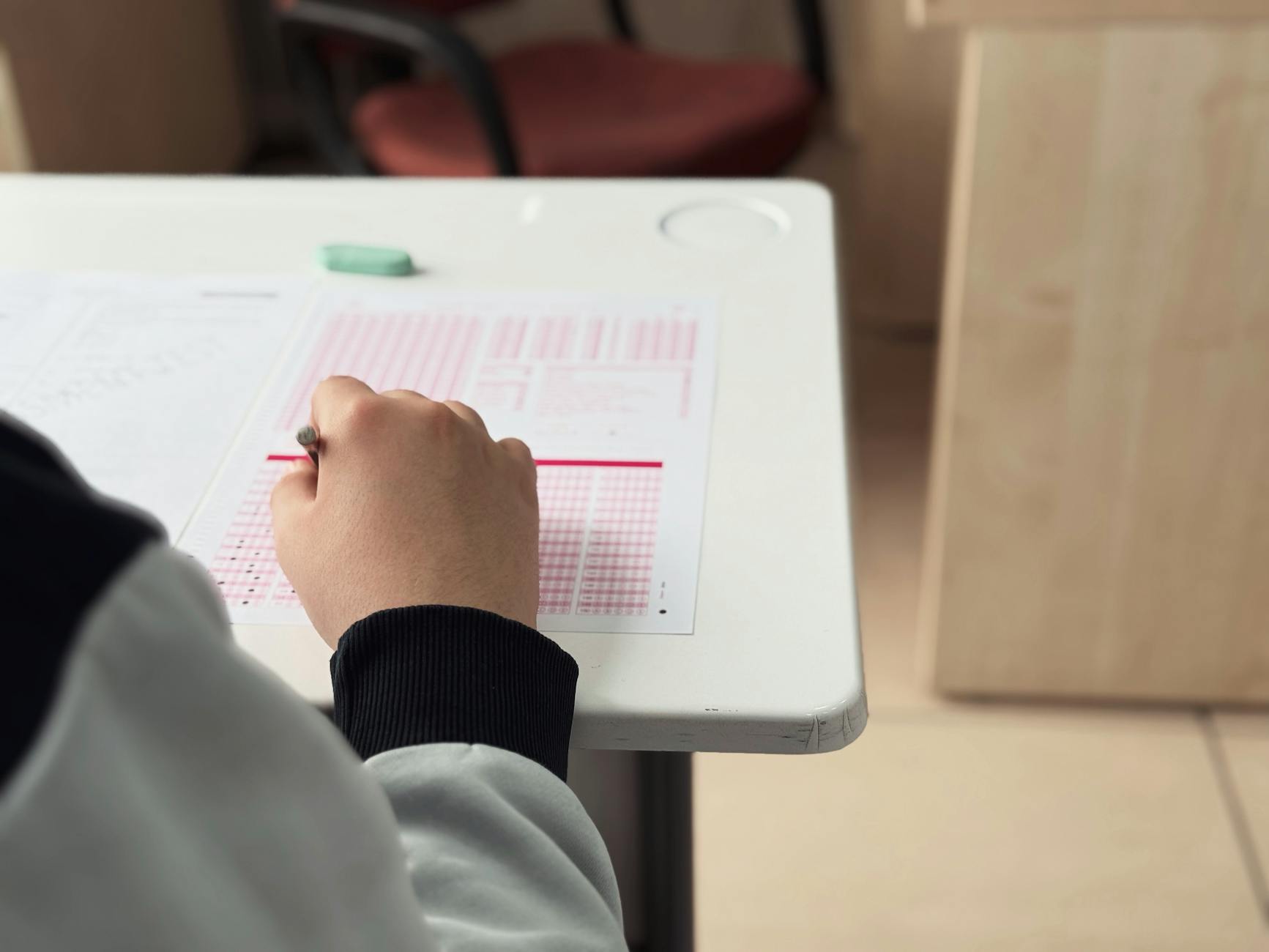
This AP Spanish Language study plan gives you a clean 8-week path from your first check-in to your final review. If you want structure without overthinking it, start with the $5 study guide.
The guide is a 47-page printable PDF with one chapter per official unit, heaviest-weighted first, 185 key terms with examples, 40 practice questions with explained answers, common exam traps, a 2-page cram sheet, and built-in 2-, 4-, and 8-week plans. If you want more practice, the $19 course adds lessons, quizzes, labs, and a timed final practice exam. The plan below shows how to use each tool at the right time, not all at once.
Start with a baseline, then build your 8 weeks
The smartest first step is not guessing what you know. Start with the free practice test. It has 25 original questions that follow the official course units and weights, and each answer has an explanation. If you make a free account, you can see your score and the explanations in one place.
That first score is not your destiny. It is a starting line. Use it to spot patterns. Are you missing more listening questions than reading questions? Are you rushing? Are the wrong answers coming from vocabulary gaps, missed details, or weak inference skills? Write down what you notice in plain words.
Then set up your materials. The $5 AP Spanish Language and Culture study guide is built from the official units and weights, and it puts the heaviest-weighted content first. That matters, because in 8 weeks you need to spend your time where it counts most.
This exam has a new format for May 2027, and it is fully digital in Bluebook. Section I, the free response section, comes first. Section II, multiple choice, comes second. The old world-language tasks do not apply here. The plan in this post is built around the current format, so your practice matches what you are actually preparing for.
How the 8-week AP Spanish Language study plan works
Use the table below as your map. It is not meant to turn every day into a marathon. It is meant to keep you moving, with a clear job each week.
| Week | Focus (exam weight) | How to use the guide and course |
|---|---|---|
| Week 1 | Part A: Listening (part 1) (50%) | Take the free practice test first, then: guide chapter, then the matching course lessons and quizzes |
| Week 2 | Part A: Listening (part 2) (50%) | Guide chapter, then the matching course lessons and quizzes |
| Week 3 | Part B: Reading (part 1) (50%) | Guide chapter, then the matching course lessons and quizzes |
| Week 4 | Part B: Reading (part 2) (50%) | Guide chapter, then the matching course lessons and quizzes |
| Week 7 | Mixed review of every unit, weakest first | All guide practice questions you missed; the course's timed practice exam |
| Week 8 | Final review | Re-take the free practice test; estimate a score with the score calculator; read the 2-page cram sheet the night before |
Here is the simple way to read the schedule. Early weeks are for learning and fixing weak spots. Middle weeks are for steady mixed practice. Final weeks are for timed work, review, and cutting down careless mistakes.
Your core tool is the guide. Because it is organized one chapter per official unit, heaviest-weighted first, you do not have to decide what to study next. You just follow the order. Read a section, review the key terms, and answer the practice questions. Every answer is explained, so the point is not just getting a number right. The point is seeing why the right answer is right.
If you bought only the guide, this AP Spanish Language study plan is still enough to give you structure. If you also have the course, use it to add more repetition. The course has 11 chapters, 59 lessons, 61 quizzes, and 58 interactive labs, so it gives you more ways to practice the same skills.
Try to treat each week as one cycle: learn, practice, check mistakes, and then repeat. Do not save all correction for the end. Fixing errors the same week is what keeps them from piling up.
A weekly routine you can actually keep
A good plan is only useful if you can stick to it. For most students, a simple weekly routine works better than one giant study block.
Use four study days each week if you can. On day one, read part of the guide and mark unfamiliar words or patterns. On day two, review those terms again and do some of the guide practice questions. On day three, do more questions, then check every explanation, even for the ones you got right. On day four, do a short mixed review and write down the traps you keep falling into.
That is the main routine. If you have extra time, add one light review day. Use it for flash review of the guide's 185 key terms, or for redoing questions you missed before.
If you bought the $19 AP Spanish Language and Culture prep course, plug it into the same routine instead of creating a second full plan. For example, pair one guide session with one course lesson or quiz. The course is built for the May 2027 exam, so it fits the current format. Keep it simple: one lesson, one quiz, one short review of errors.
You do not need a perfect week. If you miss a day, do not restart the whole schedule. Just move the next task forward. A steady 8-week plan beats an intense 3-day burst every time.
The AP Spanish Language study guide: $5, instant PDF
47 printable pages built from the official units, heaviest first: 185 key terms with examples, 40 practice questions with every answer explained, a 2-page cram sheet and 2-, 4- and 8-week study plans. Try 10 free sample questions on the page first.
See the AP Spanish Language guide →What to study for the new exam format
This exam changed for 2026-27, so your study plan should match the new task list. There are five scored parts to know.
Multiple choice is split in two parts. Part A is Listening, 25 questions, worth 25% of the score. Part B is Reading, 30 questions, also worth 25% of the score. That means multiple choice makes up half of the exam score, split evenly between listening and reading.
Free response is also half of the score, but it is broken into three tasks. Q1, Project Presentation, is 20%. Q2, Project Q and A, is 15%. That task includes 4 recorded answers that are scored together on one 9-point rubric. Q3, Argumentative Essay, is 15%.
One detail matters a lot here: the pre-exam project steps, like the written reflection and practice presentation, are teacher-only and are not part of the AP score. So for your own study time, focus on the scored tasks, not on extra work that will not affect the exam result.
The guide helps because it is built from the official units and weights. The course helps because it adds more practice in a format closer to test conditions. You can also browse the AP prep hub page if you want to compare this exam with your other AP subjects and keep your prep organized.
When to add the course, and when the guide is enough
You do not need to buy everything. Pick based on how much structure and practice you want.
If you want the lowest-cost setup, the guide alone is a solid start. It costs $5 once, downloads instantly, and gives you a printable 47-page plan with the key terms, practice questions, exam traps, and cram sheet. For many students, that is enough to organize 8 weeks without feeling lost.
If you want more step-by-step practice, add the $19 prep course. The simple math is $5 + $19 = $24 for both tools. That gives you the guide plus 11 chapters, 59 lessons, 61 quizzes, 58 interactive labs, a timed final practice exam, and a final exam, each with a written part and a scoring guide.
If you are taking several AP subjects, a plan may cost less than buying each guide one by one. AP Monthly is $29 a month and includes all 42 AP study guides and 36 AP prep courses. AP Lifetime is $149 once and includes all 42 AP study guides and 36 AP prep courses for good. For one subject, buying the guide and course separately is $24. You can compare those options on the AP plans page.
How to use the final week without cramming badly
Your last week should be sharp, not chaotic. This is where the AP Spanish Language study plan pays off.
First, go back to the guide's 2-page cram sheet. It is made for the night before, but do not wait until the last minute to open it. Use it at the start of the final week to spot anything that still feels weak. Then use it again the night before as your short review. That keeps you from rereading all 47 pages when time is tight.
Second, take your end check. Use the free practice test again if you want the same kind of quick check you used at the start. Look less at the raw number and more at the pattern of misses. Did your listening improve? Are reading errors now more about rushing than not knowing the language?
If you have the course, this is the time for its timed final practice exam. Take it under realistic conditions. After that, use the free AP score calculator to enter your raw points by section and see an estimated 1-5 score. It is an estimate, not an official conversion, but it can help you see which section moves your result the most.
Then stop adding new material. Review mistakes, review the cram sheet, and rest. AP scores run from 1 to 5, and each college sets its own AP credit policy, so check your college's rules if credit matters to you.
Frequently Asked Questions about AP Spanish Prep
Yes, for many students it is enough to give structure. The guide includes a built-in 8-week plan, one chapter per official unit, 185 key terms with examples, 40 practice questions with explained answers, common exam traps, and a 2-page cram sheet.
The course adds more guided practice. It includes 11 chapters, 59 lessons, 61 quizzes, 58 interactive labs, plus a timed final practice exam and a final exam. Each exam includes a written part and a scoring guide. It is built for the May 2027 exam.
Take it at the start of your 8 weeks for a baseline, then take it again near the end as a final check. It has 25 original practice questions that follow the official units and weights, and each answer includes an explanation.
Use the 2-page cram sheet twice in the final week. First, use it early in the week to find weak spots fast. Then use it again the night before for a short review. It works best as a summary, not as your only study tool.
Yes. AP Monthly and AP Lifetime include all 42 AP study guides and 36 AP prep courses. For AP Spanish, that includes both the $5 study guide and the $19 prep course.
It can, but credit is always the college's decision. AP scores run from 1 to 5, and each college sets its own policy for the score it needs and the credit it gives. Check your college's AP policy before you plan around credit.
Final Thoughts on AP Spanish Prep
If you want a simple setup, start with the $5 study guide and follow the 8-week schedule closely. If you want more practice and a timed final exam, add the $19 AP Spanish Language and Culture prep course. That gives you a clear plan without buying more than you need. Your next step is easy: take the free practice test, note your weak spots, and choose the guide alone or the guide plus course.
Start your AP Spanish Language prep today
$5 study guide · $19 prep course · AP Monthly $29 a month (every AP guide and 36 AP prep courses)