
Life is built in layers, and each layer does a different job. The levels of biological organization start with cells, then move to tissues, organs, organ systems, organisms, and ecosystems. Once you see the pattern, biology becomes much easier to follow because structure and function line up at every step. That matters for any student trying to memorize terms without losing the big picture. A cell is not just a tiny dot under a microscope; it is the basic unit that makes larger structures possible. A tissue is not just a group of similar cells; it is a working team. An organ is not just one body part; it is a collection of tissues solving one problem. This simple ladder makes biology structure easier to remember and helps you predict what each level can do. A good way to think about it is to ask, “What smaller parts must come together for this bigger part to work?” That question works from the first cell all the way to an entire ecosystem. It also helps when you study examples like a heart, a leaf, or a pond, because each one shows a different scale of life organized into parts that depend on one another.
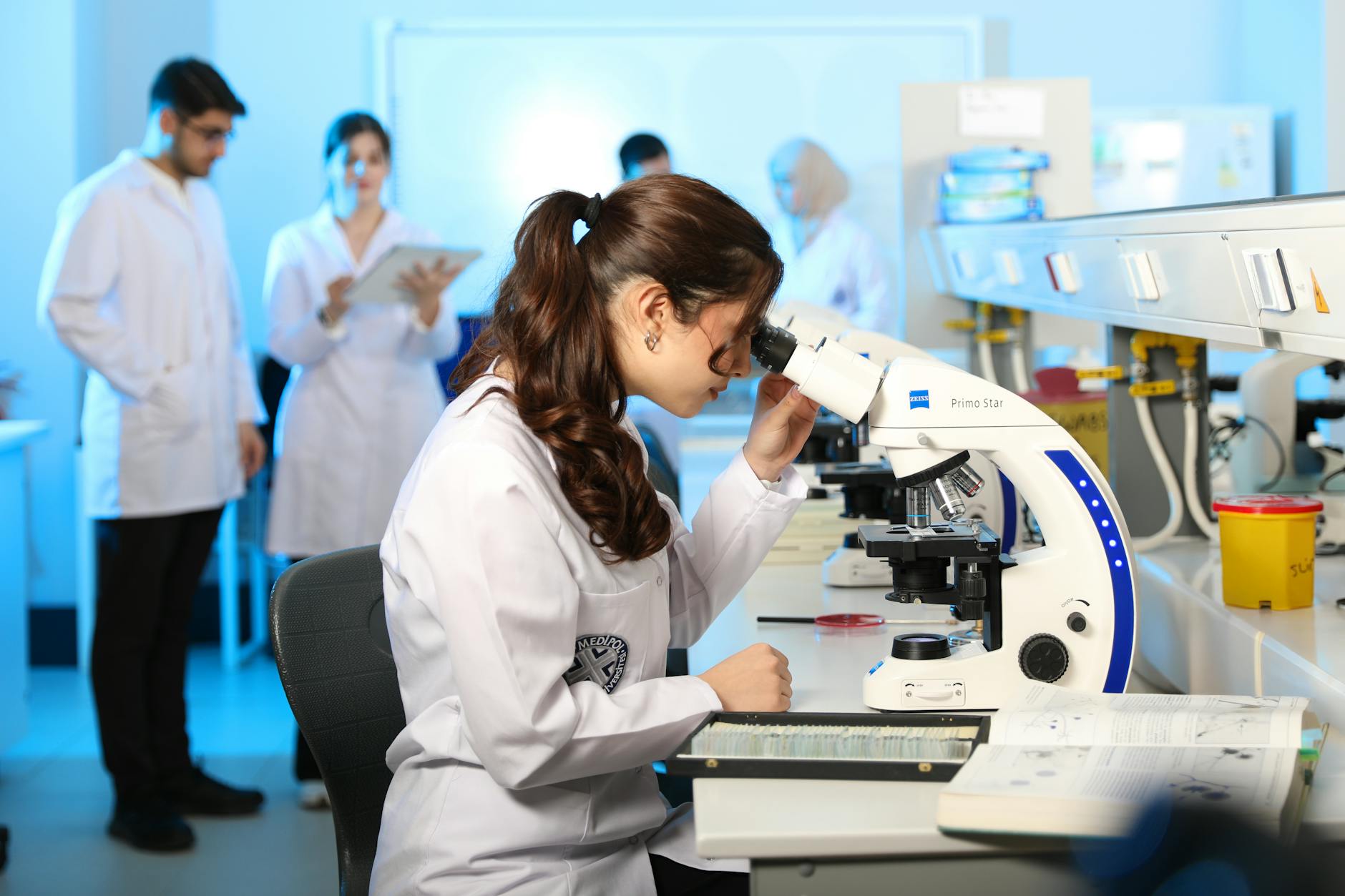
Why Biological Organization Matters
The big idea: Biological organization is the way life is arranged from tiny building blocks to whole ecosystems, and that ladder helps you connect structure with function. A cell’s job makes sense only when you see how it fits into a tissue, an organ, and then an entire organism.
For a 35-year-old paramedic studying after 12-hour shifts, this hierarchy is a shortcut, not extra trivia. If you have 5 hours a week, spend the first hour learning the order of the levels, because that gives every later example a place to stick. A fall registration deadline in 2026 can make that even more urgent for a transfer student, so use the timeline to decide whether you need a fast review or a deeper course.
The phrase “cells to ecosystems” sounds broad, but it is really one pattern repeated at larger scales. A 2-minute example can show it: a muscle cell helps a muscle tissue contract, that tissue helps a heart pump, and the heart helps the organism stay alive. Use that chain to test every chapter you read, because each step should explain what the previous step contributes.
What this means: Most students do not need to memorize 20 disconnected terms; they need to see 5 connected levels. That approach saves time and helps you answer questions about form, job, and location instead of guessing from isolated facts.
One useful anchor is Introduction to Biology I, which maps cleanly onto these basics. If you can explain the ladder in 30 seconds, you are ready to move from definitions to examples.

Cells: Life's Smallest Working Units
A cell is the smallest unit that can carry out life functions on its own, which is why it sits at the base of the whole system. Most human cells are microscopic, often around 10 to 30 micrometers wide, so use size as a reminder that tiny does not mean simple.
Different cells do different jobs. Nerve cells send signals, muscle cells contract, and plant cells use chloroplasts to capture light. That variety is the point: the body and the plant are both built from specialized parts, and each part is shaped for one task. Reality check: A cell is not “just” a basic unit; it is also a specialized worker. That means you should study examples by function, not just by name, so you can tell why a nerve cell looks different from a muscle cell.
A 35-year-old paramedic studying after shifts may only have 20 minutes before bed, so focus that time on comparing 3 cell types instead of rereading every paragraph. If you remember that nerve cells transmit, muscle cells move, and plant cells capture energy, you can answer many intro-biology questions faster.
Cell membranes, nuclei, and mitochondria appear often because they explain how cells survive and work. A mitochondrion helps make energy, so connect that organelle to any question about movement, repair, or growth. If a test asks why cells matter, answer that they are the starting point for all higher levels, including tissues and organs.
Biology 1 course content often begins here because everything above the cell depends on this idea. Keep the biology course page handy when you need one clean review of cell structure and function.
The Complete Resource for Biological Organization
TransferCredit.org has a full resource page built for biological organization — covering CLEP/DSST prep with chapter quizzes and video lessons, plus the ACE/NCCRS-approved backup course if you do not pass the exam. $29/month covers both, and credits transfer to partner colleges.
Explore Biology 1 Course →From Cells to Tissues and Organs
Cells that do the same job often stick together as a tissue. In humans, muscle tissue helps movement, nervous tissue helps signaling, connective tissue supports, and epithelial tissue covers surfaces. The key idea is that a tissue is more organized than a single cell because 100s or 1000s of cells coordinate one function.
That specialization gets stronger at the organ level. The stomach, for example, is made of several tissue types working together to mix food, release acid, and move material along. A leaf does something similar in plants: it uses multiple tissues to capture light, exchange gases, and move water. Bottom line: When you study tissues and organs, ask what problem the structure solves, because each level is built for a narrower job than the one below it.
A community-college transfer student timing CLEP around a fall registration deadline should treat these terms as a chain, not four separate vocabulary cards. If the exam is 6 weeks away, spend the first 2 weeks drawing the path from cell to tissue to organ, because diagrams make the sequence easier to recall under pressure.
One counterintuitive point helps here: the smallest parts are not always the hardest to understand. Many prep guides waste time on rare examples, but most test questions stay with 4 common organs and the tissues that form them. Use that pattern to your advantage, because knowing one clean example of a stomach or leaf teaches you more than memorizing a long list.
For a fuller walkthrough, Introduction to Biology I can reinforce the tissue-and-organ step with diagrams and practice. If you want one more reference point, Introduction to Biology II adds broader examples of how structure changes with function.
How Organ Systems Build Organisms
An organism is the complete living thing, and it works because organ systems cooperate. The digestive system breaks down food, the circulatory system moves nutrients and oxygen, and the respiratory system brings in oxygen and removes carbon dioxide. Each system has a job, but none of them works alone for long.
That coordination is why the whole is more than the parts. A heart can pump, but without lungs, blood cannot carry enough oxygen; without the digestive system, cells cannot get the fuel they need. In a 24-hour day, these systems keep adjusting to what the body needs, so use them as a reminder that biology is dynamic, not static.
A homeschool senior taking 3 CLEPs in one summer needs that dynamic view because system-level questions often ask for relationships, not definitions. If a review window is only 8 weeks, spend 2 of those weeks comparing how organs support one another, because that turns scattered facts into a usable model.
Worth knowing: Organ systems are often where students finally see why organization matters: one part changes, and several others respond. That means a single example, like exercise, can connect breathing, heart rate, and muscle use in one answer.
A complete organism is not just a pile of organs; it is a coordinated network that keeps conditions stable enough for life. If you can explain how food, oxygen, and waste move through the body, you already understand the central logic of this level.
A quick biology review can help you practice these links with simple diagrams, especially if you need to move from memorizing organ names to explaining how they work together.
Ecosystems Extend the Pattern
Biological organization does not stop at one organism. Populations are groups of the same species, communities include many species, and ecosystems add the nonliving environment too. That means air, water, soil, sunlight, and temperature all shape life just as much as predators or food do.
A 1-acre pond can show the whole pattern at a small scale. Fish, algae, insects, and bacteria form a community, while the water, rocks, and dissolved oxygen form part of the ecosystem. If one factor changes by even 10%, such as less oxygen in the water, the next sentence should be to ask which organisms would be affected first and why.
A student with 4 weeks before a biology exam should study ecosystems by tracing interactions, not by memorizing isolated species names. Start with one organism, then ask what it eats, what eats it, and what physical conditions it needs. That method makes ecology basics easier because every answer points to a relationship.
The same pattern appears in forests, deserts, and even city parks. Trees, fungi, insects, birds, and soil microbes all influence one another, and the result is a system shaped by both living and nonliving parts. If you understand that an ecosystem is a web of interactions, you can explain why a single drought or invasive species can change the whole area.
Biology 1 study material is useful here because it usually connects organism-level facts to larger environmental patterns. That bridge matters when you need to move from one species to the system around it.

How TransferCredit.org Fits
Frequently Asked Questions about Biological Organization
Cells come first, then tissues, organs, organ systems, organisms, populations, communities, and ecosystems. A heart cell, heart tissue, and the whole heart show the pattern well, and a single tree sits inside a forest ecosystem with soil, water, and animals around it.
Most students memorize a long list, but what actually works is grouping 2 or 3 levels together and linking each one to a real example. A red blood cell, blood tissue, and the circulatory system stick faster than a list alone.
The most common wrong assumption is that each level stands alone, but each level depends on the one below it. Cells make tissues, tissues make organs, and organs work together inside an organism like the stomach and small intestine do in digestion.
You mix up the whole biology structure, and that makes test questions and lab work harder. If you call a group of cells an organ, you miss how structure changes from 1 cell to many cells with one shared job.
This applies to anyone in intro biology, health classes, or ecology basics, and it doesn't require memorizing every cell type in the body. If your class only covers cells to ecosystems, you just need the big 8 levels and a few examples.
1 cell is the starting point, and most biology classes build from there to tissue, organ, organ system, organism, population, community, and ecosystem. Use that order when you study, because the test usually asks you to move from smaller parts to bigger ones.
What surprises most students is that an ecosystem includes living and nonliving parts, not just plants and animals. Rocks, water, sunlight, and bacteria all count, so biological organization reaches past the organism level into the space it lives in.
Start with 3 simple chains: cell to tissue, tissue to organ, and organ to organ system. Then add organism, population, community, and ecosystem, and use one example each like muscle cell, heart, humans, and a pond.
Tissues are groups of similar cells, and organs are groups of tissues that work together. Muscle tissue helps the heart pump, while the heart itself uses muscle, nerve, and connective tissues to do one job.
Most students reread the chart, but what actually works is drawing a 1-line chain and labeling each step from cell to ecosystem. A quick sketch of a leaf cell, leaf tissue, a leaf, and a plant makes the levels of organization stick.
The most common wrong assumption is that ecology basics only cover animals, but plants, fungi, bacteria, and abiotic factors all matter. A forest ecosystem includes deer, oak trees, mushrooms, soil, rain, and temperature, not just the animals you can see.
You lose easy points because teachers often ask which level a structure belongs to, and the wrong label changes the whole answer. If you call a community an ecosystem, you've missed the nonliving parts like water and light.
This applies to students in middle school, high school, and intro college biology, and it doesn't require advanced genetics or biochemistry. If your class stops at ecosystem, you can focus on the 7 or 8 main levels and skip deeper detail.
Final Thoughts on Biological Organization
The levels of biological organization are easier to remember once you see them as a ladder of purpose. Cells perform basic life functions, tissues group similar cells, organs combine tissues, organ systems coordinate multiple organs, organisms live as complete beings, and ecosystems show how life depends on its surroundings. If you are studying for a class, a placement test, or a transfer requirement, start with the order first and the details second. The order gives you a map. Without it, facts feel random; with it, examples start to make sense. A nerve cell, a heart, a person, and a pond all become easier to explain because each one fits into a larger pattern. The best next step is to practice one example at each level until you can move through the whole chain without pausing. Try cell, tissue, organ, organism, ecosystem, then go backward and see if you can explain how each depends on the one below it. That simple drill turns a long biology chapter into one clear story, and it is a story you can use on exams, in class, and in real science conversations.
How CLEP credits actually work
Ready to Earn College Credit?
CLEP & DSST prep + ACE/NCCRS backup courses · Self-paced · $29/month covers everything