
A score of 50 can be enough to earn the same college credit as an 80, so chasing perfection on this exam wastes time. The better move is to learn the big patterns first, then fill in the facts that show up again and again. That matters on CLEP social sciences and history because the exam reaches across U.S. history, world history, government, economics, geography, sociology, and psychology. It also means you can get lost fast if you start with random flashcards. The College Board recommends credit for a passing score of 50 on the 20-80 scale, but schools set their own credit rules. Some schools post 3 credits, some post 6, and some split the exam between history and social science requirements. Check your target school before you study a single week. This exam rewards broad recall, not deep detail. A working adult with 5 hours a week should study differently than a student with 20 hours and a full summer. The win comes from knowing what to study first and what to skip until the end.
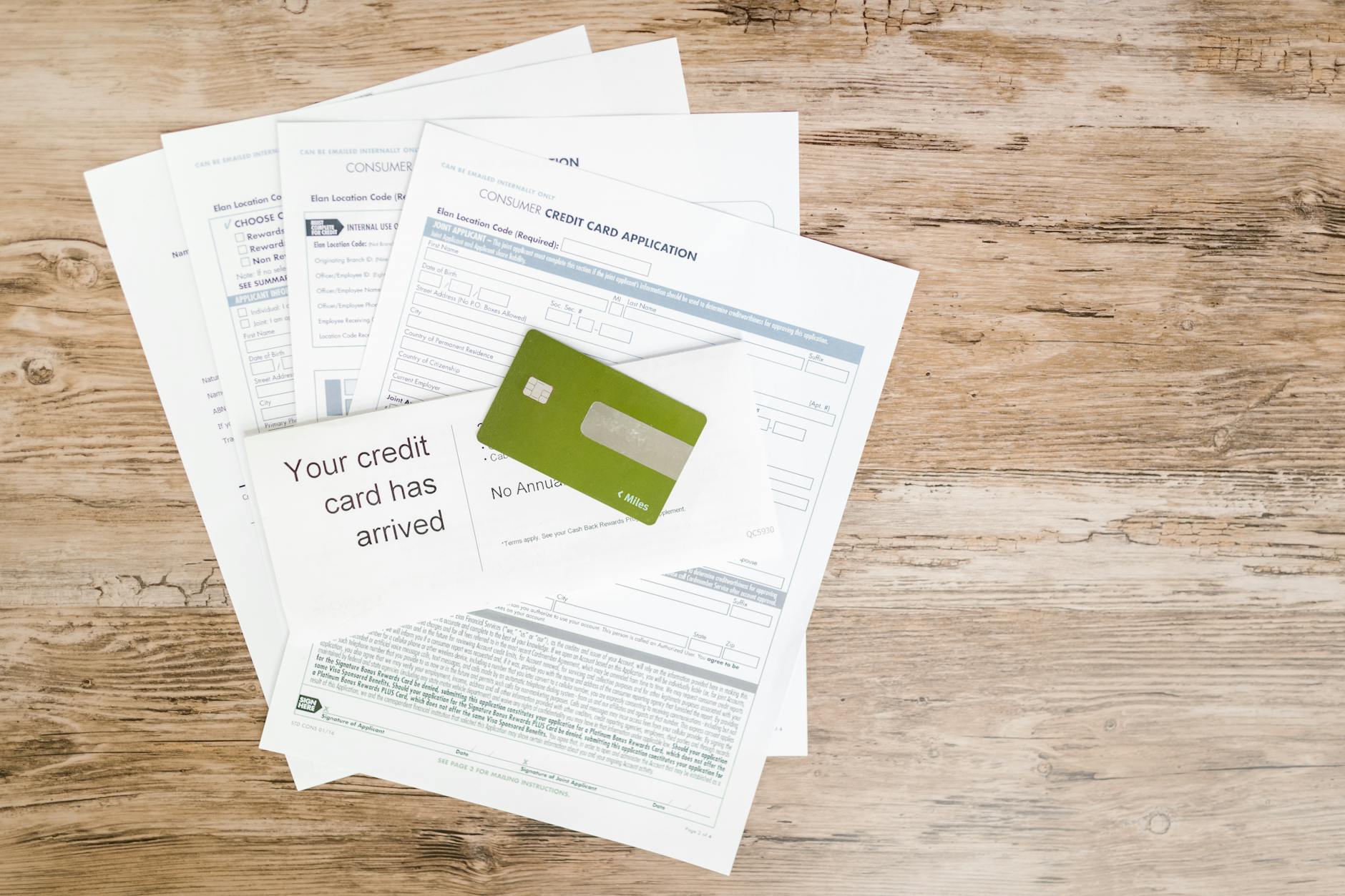
What CLEP History Actually Tests
The exam covers a wide spread of material, and that is why it feels messy. You will see U.S. history, world history, government, economics, geography, sociology, psychology, and other social science basics. The College Board recommends credit for a score of 50 on the 20-80 scale, so treat 50 as the pass line and build your study plan around that score, not around perfect recall.
The content mix matters more than any single fact. U.S. history and world history give you the biggest frame, while government, economics, and geography give you the structure for why events happened. Sociology and psychology add common terms, basic theories, and simple cause-and-effect ideas. If you spend 6 hours memorizing tiny dates and ignore the big patterns, you will miss the questions that tie the whole test together.
The catch: Most schools do not post the same credit award for this exam, even when they accept the 50 score. Some schools give 3 semester hours, some give 6, and a few split the credit across history and social science requirements, so check your catalog before you bank on a number. A 35-year-old paramedic studying after 12-hour shifts should use that rule to pick a target school first, then study only the topics that fit that school’s requirement window.
The easiest way to think about the exam is this: 1 test, many small lanes. If you treat it like a survey course with 7 topic buckets, you stay focused. If you treat it like a timeline dump, you burn time and keep almost nothing.

What To Study First For CLEP
Start with the stuff that shows up everywhere. Do not begin with isolated trivia. This exam rewards themes, categories, and simple cause-and-effect more than tiny fact chains, and that is why a 2-week plan can work if you stay disciplined.
- Learn the big U.S. and world history timeline first. Build a rough map from colonization through the 20th century, because dates make more sense once you know the order.
- Study government and economics next. Spend 30 to 60 minutes on branches of government, voting, supply and demand, inflation, and basic market ideas, since those topics keep showing up in mixed questions.
- Move to sociology and psychology after that. Focus on 10 to 15 core terms in each area, not every theory ever printed in a textbook.
- Use geography as a support layer. Learn regions, migration, population, and map-based ideas so you can answer cross-topic questions faster.
- Do one full review pass in the last 5 to 7 days. That is the time for practice tests, missed-question logs, and any fact set you still cannot recall in 10 seconds.
Reality check: The biggest mistake on this exam is trying to memorize every fact before you understand the framework. A student who knows 5 eras, 4 government branches, 3 economic ideas, and 2 social science theories will usually beat someone who copied 200 flashcards but cannot explain how the pieces fit. That is the counterintuitive part: less memorizing at the start usually gives you a better score.
If you only have 1 hour a day, start with history and government on days 1-4, then add the social science terms after that. A one-pass approach beats a perfection loop every time.
The Complete Resource for CLEP Social Sciences History
TransferCredit.org has a full resource page built for clep social sciences history — covering CLEP/DSST prep with chapter quizzes and video lessons, plus the ACE/NCCRS-approved backup course if you do not pass the exam. $29/month covers both, and credits transfer to partner colleges.
Browse CLEP Prep Courses →A Realistic Study Plan For Working Adults
This exam does not ask for deep mastery the way a major-specific history class does. It asks for wide coverage across 7 content areas, and that makes it a better fit for short, focused prep than for long, slow reading marathons. A working adult who has 4 to 6 hours a week can still get ready in 4 to 6 weeks if the study plan stays tight and the practice tests do the heavy lifting. The danger is overstudying one section and leaving 3 others weak.
- 2 weeks: 5-6 hours weekly, one broad history pass, one government/economics pass, one practice test.
- 4 weeks: 4-5 hours weekly, two content passes, one missed-question log, one timed review in week 4.
- 6 weeks: 3-4 hours weekly, slow first pass, then 2 full practice tests, then a final fact sweep.
- Every week: spend 60% of study time on history and government, 40% on the rest.
- Last 5 days: stop collecting notes and fix only weak spots from practice scores.
Bottom line: If your score on a practice test sits 10 points below passing, add 1 extra week instead of cramming 2 more hours the night before. That extra week usually buys cleaner recall than another pile of notes.
A homeschool senior trying to clear 3 CLEPs in one summer should not run this exam first if history feels shaky. The smarter move is to give this one a full 4-week block, then stack the next subject after the score comes back.
CLEP History Vs Similar CLEP Exams
This exam sits in the middle on difficulty. It is broader than a single-subject test like U.S. History I or U.S. History II, but it usually feels less deep than a course built around one narrow era or one discipline. That matters because broad tests punish sloppy coverage, while narrow tests punish weak detail. Pick the one that matches your study time, not your ego.
| Exam | Breadth | Main Challenge | Study Load |
|---|---|---|---|
| Social Sciences and History | Very broad | 7 subject areas | 4-6 weeks |
| U.S. History I | Medium | Colonial to 1877 detail | 3-5 weeks |
| U.S. History II | Medium | 1877 to present detail | 3-5 weeks |
| Western Civilization I/II | Broad but narrower than this exam | Europe-centered chronology | 4-6 weeks |
If you want the fastest path, U.S. History I or II can feel easier because the topic range stays tighter. If you want one exam that can cover more than one gen-ed slot, this broader test can pay off better.
Costs, Credit, And Prep Options
The money side is simple if you keep the lanes separate. CLEP credit comes from a passing score of 50 on the 20-80 scale, and the College Board recommends credit, but each school still decides how many semester hours it awards. That is why a student should check the catalog before paying for prep, because 3 credits at one school can turn into a different rule at another.
Worth knowing: A score of 50 does not mean “barely good enough” in the way people think it does. It means you crossed the line the school uses for credit, so once you pass, you should stop polishing weak trivia and move on to the next requirement.
TransferCredit.org and UPI Study sell CLEP and DSST prep for $29 per month, and that subscription includes chapter quizzes, video lessons, and practice tests. If you fail the exam, the same subscription gives you a backup ACE-recommended or NCCRS-recognized course at no extra charge, which matters if you want a second path to credit instead of paying twice. TransferCredit.org also offers 70+ self-paced ACE/NCCRS-recommended college courses for about $250 per course, and that is the cleaner choice if you want a direct course record instead of a test score. Credits from ACE and NCCRS options reach 2,100+ colleges and universities, while CLEP credit reaches 2,900+ U.S. colleges, so check which lane your school likes before you buy anything. The optional Excelsior University OneTranscript service can also bundle ACE/NCCRS credits onto one regionally accredited transcript.
A community-college transfer student trying to finish before fall registration should use the $29 plan if the exam date sits 3 to 4 weeks away. If the test goes badly, the backup course keeps the credit plan alive without starting over. Verify live figures before publishing, because prices and school rules move.

How TransferCredit.org Fits
Frequently Asked Questions about CLEP Social Sciences History
It covers a broad survey of U.S. history, Western and world history, economics, government, geography, sociology, psychology, and anthropology. It is not a deep-dive history exam. It checks whether you can recognize major ideas, people, events, maps, charts, and social-science concepts across multiple fields.
Start with the biggest domains: U.S. history, world history, and government/politics. Those areas usually make up the most familiar test content for most adults and transfer students. After that, move to economics, geography, sociology, psychology, and anthropology. Don’t begin with memorizing dates. Start with broad themes and cause-and-effect.
A realistic plan is 4 to 8 weeks at 5 to 8 hours per week. If you already know U.S. history or civics, you may need less. If the material is mostly new, plan closer to 8 weeks. The exam is broad, so short daily study beats one long cram session.
The biggest mistake is studying like it is only a history test. It is not. Students often ignore economics, psychology, sociology, anthropology, and geography, then lose points on questions they never reviewed. Another common error is memorizing facts without learning how ideas, eras, and systems connect.
It is usually harder than a single-subject CLEP like U.S. History I or Introductory Psychology because it spans many fields. It is often easier than high-memorization exams for students who like broad survey material. If you want one subject with narrower scope, a single-discipline CLEP is usually simpler.
CLEP U.S. History I is narrower but deeper, so it rewards focused history study. American Government is also narrower and usually easier to plan for because the content is more contained. Social Sciences and History is broader and less predictable, so you need wider coverage and better review strategy.
Use a three-step plan. First, take a diagnostic quiz to find weak areas. Second, study the core domains in order: U.S. history, world history, government, then the social sciences. Third, do timed practice questions every week. The goal is coverage first, then recall, then speed.
College Board recommends a passing score of 50 on the CLEP 20–80 scale, but schools set their own policies. Typical credit recommendations vary by institution and major, so always check the receiving college. Do not assume every school grants the same hours or accepts the same score.
No. Acceptance is school-by-school. Many U.S. colleges accept CLEP, but placement, elective credit, and major credit rules differ. Some schools cap the amount, some require a higher score, and some exclude it from certain programs. Check your registrar or transfer guide before you register.
TransferCredit.org, with partner UPI Study, offers CLEP/DSST prep plus an ACE/NCCRS backup course subscription for $29/month. If you fail the exam, the same subscription opens up the matching ACE/NCCRS course at no charge. They also offer 70+ self-paced ACE/NCCRS courses at about $250 each.
CLEP credit is accepted at 2,900+ U.S. colleges, while ACE/NCCRS credit is accepted at 2,100+. CLEP is usually the cleaner first choice if your school accepts it. ACE/NCCRS backup is useful if you want a second path to credit after a failed exam or need a course-based option.
If you need broad elective credit, already know some U.S. history and civics, and can study for 4 to 8 weeks, CLEP is worth considering. If you need guaranteed course credit, the ACE/NCCRS backup path may fit better. Start your CLEP/DSST prep for this subject here: [TransferCredit.org CLEP Social Sciences and History prep](https://transfercredit.org/clep-social-sciences-and-history)
Final Thoughts on CLEP Social Sciences History
This exam rewards calm coverage. Not heroic cramming. A student who knows the major eras, the main government ideas, the core economics terms, and the basic social science vocabulary can pass without memorizing every date in the book. That is the whole trick. The exam also punishes bad order. Start with history and government, then add economics, geography, sociology, and psychology, and save the final days for timed review. A 2-week sprint works only if you already know the basics. A 4-week plan gives most adults more breathing room, and a 6-week plan helps when work, kids, or class load chew up the week. Do not let the broad topic list scare you off. Broad does not mean impossible. It means you need a plan that respects the shape of the test instead of treating it like a lecture course. Pick your target school, check its credit rule, and build from the highest-yield topics first. Start the prep now.
Three roads, one of them is yours
Ready to Earn College Credit?
CLEP & DSST prep + ACE/NCCRS backup courses · Self-paced · $29/month covers everything