
3 a.m. is a bad time to learn that your brain has gone blank. Your notes sit open. Your stomach feels tight. Your hands sweat over a practice test that looked easy yesterday and feels rude today. That mess has a name: exam anxiety. And no, you do not fix it by telling yourself to “calm down” in a flat voice and hoping your body listens. A lot of students think exam anxiety means they “can’t handle pressure.” I do not buy that. Most of the time, the real problem is a bad mix of study stress, weak planning, and a mind that treats one test like a threat to your whole life. That sounds dramatic because it is dramatic. Your body does not care that the test only lasts 90 minutes. It fires anyway. People miss this part. Calm does not show up first. Action does. You start with a plan, then you add focus techniques, then you build a few simple habits that keep your brain from spiraling. That shift changes how you study and how you sit in the room.
You stay calmer on exam day by lowering the chaos before test day and giving your body a clear routine during the test. That means real study planning, sleep, short breathing breaks, and a mindset that treats the exam like one event, not a verdict on your worth. One small fact people skip: a 4-7-8 breathing cycle can slow your heart rate in under a minute if you use it right before the exam starts. Not magic. Just biology. The goal is not to feel zero stress. That never happens for most people. The goal is to keep stress low enough that your memory still works and your focus does not fall apart.
Who Is This For?
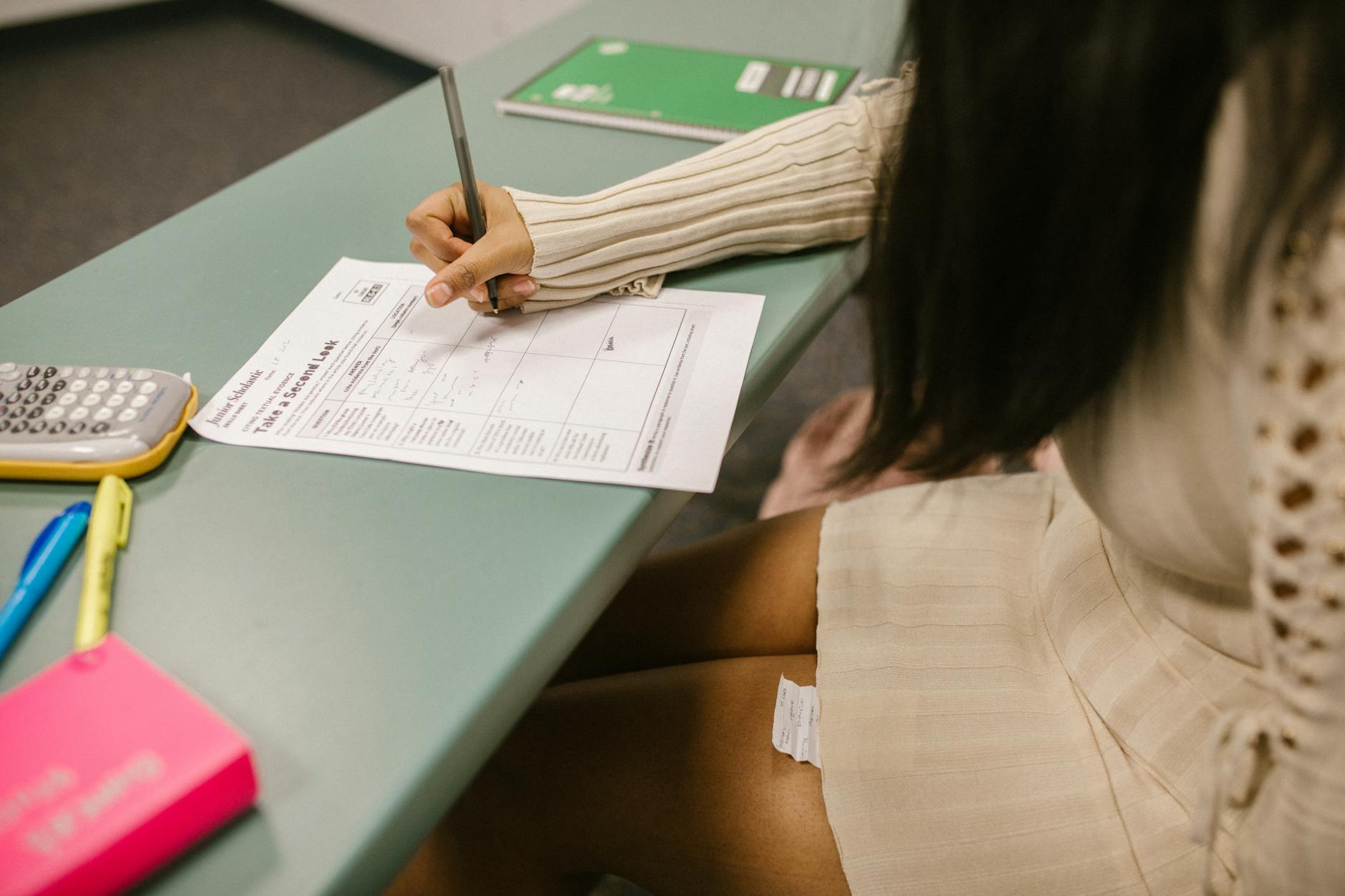
This hits hardest when you know the material but panic makes it hard to show. Maybe you blank on multiple-choice questions. Maybe you study for hours and still feel shaky the night before. Maybe you do fine on quizzes but fall apart on finals because the room, the clock, and the pressure all gang up at once. That is classic exam anxiety, and it often rides with student mental health issues like sleep loss, burnout, or nonstop self-criticism. It also shows up in people who keep saying, “I just need to cram harder.” That approach often backfires. You get more facts in your head, but you also pile on more stress, and your brain starts to tie studying to dread. This does not fit every student. If you never feel stress before tests and you already use a steady routine, this article may feel basic. It also does not help much if your real problem is that you never learned the class content at all. Anxiety can blur things, sure, but it cannot replace missing practice. One group should not waste time chasing “perfect calm”: students who treat fear like a personality trait. That mindset keeps them stuck. You can change habits. You do not need a new personality.

Understanding Exam Anxiety
Exam anxiety messes with attention first. Then it hits recall. Then it makes you second-guess answers you already knew. That order matters. People often think stress only feels bad, but it also changes how you think in the moment. Your brain starts scanning for danger, and a test suddenly feels like a trap instead of a task. A lot of students get this wrong. They think they need to feel confident before they study well or test well. I think that idea causes a ton of damage. Confidence usually comes after repetition, not before it. You build it by showing yourself that you can sit down, start, and keep going even while your nerves make noise. The part that matters most: exam anxiety feeds on uncertainty. If you do not know what to study, when to study, or how to handle your body before the test, your mind fills the gap with worst-case stories. That is why plain old structure helps so much. A study schedule cuts down the unknowns. A short breathing routine gives your body a job. A better inner script keeps one rough question from turning into a full collapse. One policy-like detail most people miss: the human stress response usually starts in seconds, not minutes. That means you can change the tone of your test day fast if you know what to do before the panic gets rolling.
CLEP & DSST Prep + ACE/NCCRS Backup Courses
Prep for CLEP and DSST exams with chapter quizzes, video lessons, and practice tests. If you fail the exam, the same $29/month subscription gives you the ACE/NCCRS-approved course as a backup — credit either way.
Browse All Courses →How It Works
The before picture is ugly but common. A student wakes up late, skips breakfast, checks old notes in a panic, then spends the whole ride to campus thinking, “I should know more.” Their chest feels tight. Their mind jumps from chapter to chapter. They sit down for the exam already tired from arguing with themselves. That kind of start makes even easy questions feel slippery. The after picture looks almost boring, and that is why it works. The student starts the week with a simple study plan. Not a heroic one. Just clear blocks, a few practice questions each day, and one review session for weak spots. The night before, they stop cramming at a set time. They sleep. They eat. They take a few slow breaths before walking in. During the exam, they spend the first minute scanning the whole page instead of attacking the hardest question first. That order helps more than people think. First, you calm the body. Then you steady the mind. Then you protect your focus when the test starts throwing curveballs. If a question trips you up, you do not freeze and stare at it like it owes you money. You mark it, move on, and come back later. That one habit saves a lot of points. A good plan also leaves room for mistakes. That sounds strange, but it helps. If you expect one rough patch, you stop treating it like a disaster. The student who used to panic at the first hard question now sees it as part of the exam, not a sign that everything went bad. That shift changes study stress into something you can handle.
Why It Matters for Your Degree
Students miss this part all the time: one rough exam can push back a whole term, and that can snowball into a real delay. If you needed the credit to meet a prereq, you do not just lose one class. You lose the next class, too. Then the graduation date slides. Fast. The part that stings: a single three-credit class can cost far more than the exam path, and the delay can also cost you a whole semester of time. I have seen students focus so hard on the test itself that they forget the bigger bill sitting behind it. That bill shows up as extra tuition, extra fees, and more months before you can finish. One failed attempt can also mess with financial aid timing, course planning, and transfer deadlines. That last one catches people off guard. A deadline sounds boring until it blocks the exact course you needed.
Students who plan their credit transfer strategy early save $5,000 to $15,000 on total degree costs, and often cut their graduation timeline by a full semester.
The Complete Exams Credit Guide
TransferCredit.org has a full resource page for exams — covering CLEP/DSST prep material, chapter-by-chapter quizzes and video lessons, plus the ACE or NCCRS-approved backup course if you don't pass the exam. $29/month covers both.
See the Full Exams Page →The Money Side
People love to talk about stress management like it lives in a notebook. Money is the part that wakes people up. A traditional college class often runs hundreds of dollars per credit hour, and that means a single three-credit course can land in the four-figure range before books, fees, and campus costs. That hurts. A lot. TransferCredit.org keeps the math simple. For $29/month, students get full CLEP and DSST prep, including chapter-by-chapter quizzes, video lessons, and practice tests. If they pass the exam, they earn official college credit through the test. If they do not pass, the same subscription gives them access to an ACE or NCCRS-approved backup course on the same subject, and that course also earns credit. No extra charge. That is a very different price story than paying full tuition for a class that only gives you one shot. Frankly, the old system feels bloated. You pay more, wait longer, and still end up stressed.
Common Mistakes Students Make
First, a student buys random study materials from three different places. That seems smart because they want to cover every angle, and exam anxiety makes people hoard resources like supplies before a storm. Then they waste money on overlap, spend too much time sorting through bad notes, and still miss the test format they actually need. Second, a student delays the exam because they want to “feel ready.” That sounds reasonable. Nobody wants to walk in cold. But delay usually means another month of fees, another month of study stress, and a longer wait before credit posts. I have seen more money lost to hesitation than to bad content. Third, a student signs up for a standard class out of fear, not strategy. That feels safe because a classroom looks familiar. Still, it can cost hundreds or even thousands more than a focused exam path, and it drags out the timeline when a faster route already exists. That move makes me shake my head every time.

How TransferCredit.org Fits In
TransferCredit.org belongs in the exam-prep lane first. That matters. It is not a generic content library dressed up with a fancy name. It is a CLEP and DSST prep platform built to help students study, pass, and earn credit by testing out. The prep bundle gives you the chapter quizzes, video lessons, and practice tests you need for that first shot. The two-path setup is the real draw. If you pass the exam, you earn credit through the exam. If you miss, your same $29/month subscription opens the ACE or NCCRS-backed course on that same subject, and that course also earns credit. So you do not pay twice for a backup plan. That is not a side note. That is the whole point.


Before You Subscribe
Check the exam title you need against your degree plan before you start. A tiny mismatch can waste time, and exam anxiety loves tiny mismatches. You also want to know whether your school wants CLEP or DSST for that slot, because the prep path should match the test, not your mood on Tuesday. Then look at the course that lines up with your subject. For example, Introductory Psychology gives you a clear subject match if that is the credit you need. If you are comparing options, check the number of credits, the course title, and the timing for when you need the credit posted. Also watch your own study habits. If you freeze on long reading, pick a plan with more practice tests. If you get rattled by timed work, build in short drills. And yes, your student mental health matters here, because study stress changes how you perform long before test day shows up.
See Plans & Pricing
$29/month covers full CLEP & DSST prep (quizzes, video, practice tests) plus free access to the ACE/NCCRS backup course if you don't pass the exam. No hidden fees.
View Pricing →Frequently Asked Questions
If you ignore exam anxiety, it usually shows up in the worst possible moment. Your mind blanks, your hands shake, and simple facts that felt easy last night suddenly feel far away. That can turn one rough question into a full spiral. You need a plan before test day. Start with 10 minutes of slow breathing: inhale for 4, hold for 4, exhale for 6. Then do a 20-minute review of the hardest material, not a full cram session. Your brain likes structure when stress hits. Sleep matters too. A student who gets 7 to 9 hours usually thinks more clearly than one who stays up until 2 a.m. You can also use one short phrase, like “one question at a time,” to stop panic from taking over. Keep your water nearby. Small things help more than people think.
You can calm yourself fast with a few simple moves, and you don't need a long routine. Start by dropping your shoulders and unclenching your jaw. Then do box breathing for 1 minute: in for 4, hold for 4, out for 4, hold for 4. That pattern gives your body a clear signal to slow down. The caveat is that you can't use breathing alone if your mind keeps racing, so pair it with a tiny focus reset. Name 3 facts you know on the topic. Read the first question twice before answering. If your heart is still pounding, press both feet into the floor for 10 seconds. That grounds you fast. A lot of exam tips talk about confidence, but your body needs a cue first. You can also avoid checking other students. That habit feeds study stress.
Most students cram, reread notes for hours, and hope the last-minute pressure will somehow stick. What actually works better is spaced review with short breaks. You study 25 minutes, then rest 5. Do that 3 or 4 times, and your brain keeps more than it does during a marathon session. For exam anxiety, this matters a lot because panic grows when you feel unprepared. You should also test yourself, not just read. Use flashcards, practice questions, or teach the idea out loud in plain words. That pulls up weak spots fast. A quick workout helps too. Even 15 minutes of walking can lower stress management problems before a test. Don't try to learn everything the night before. Pick the 3 topics that show up most often and hit those first.
First, write down the exact part that scares you. That can be timing, memory, or a blank page. Then split it into one small action you can do today. If timing scares you, take one 10-question practice set and give yourself the real time limit. If memory scares you, make a 1-page cheat sheet from memory, then check what you missed. This works because your brain calms down when you stop treating the whole exam like one giant threat. You also need sleep and food. A skipped meal can make study stress feel twice as bad. Drink water. Eat something with protein, like eggs or yogurt, about 1 to 2 hours before the test. Your focus techniques should match your problem, not your mood, and that's where most students miss.
What surprises most students is that calm doesn't come from feeling ready. It comes from having a repeatable routine. You can feel nervous and still do well. That's normal. A lot of students think they need to get rid of exam anxiety before they start, but that idea wastes time. Try this instead: 3 slow breaths, read the directions, then answer the easiest question first. That gives your brain an early win. Another surprise is that self-talk matters. If you say, “I'm terrible at this,” your body listens. If you say, “I've handled hard tests before,” your body settles a little. You don't need fake cheer. You need honest talk. A student who practices 5 minutes of positive self-talk before class often handles exam tips better than one who waits for perfect confidence, and that tiny habit can change how your hands feel when you open the test.
The most common wrong assumption students have is that pressure will push you to do your best. Sometimes it does. Most times, it just raises your heart rate and makes recall worse. You can't think clearly when your brain thinks you're in danger. That's why stress management works better when you treat exam anxiety early, not after it spikes. Build a simple study plan 5 days ahead, with 2 main blocks a day and 1 short review at night. Then rehearse under test-like conditions once before the real exam. Use a timer. Use quiet. Put your phone in another room. During the test, skip a hard question and come back later. That protects focus techniques from panic. Students who do this usually feel less trapped, and that matters when you're staring at question 12 and your mind starts to race.
Final Thoughts
Exam anxiety gets louder when the stakes feel vague. Make the stakes concrete. Know the test, know the cost, know the backup, and know what one credit actually does for your degree plan. That beats wishful thinking every time. Start with one subject and one clear plan. If you want a clean route, TransferCredit.org gives you a $29/month path with prep first and a backup course if you need it. That is a very tidy way to turn stress into credit.
Ready to Earn College Credit?
CLEP & DSST prep · ACE/NCCRS backup courses · Self-paced · $29/month covers everything