
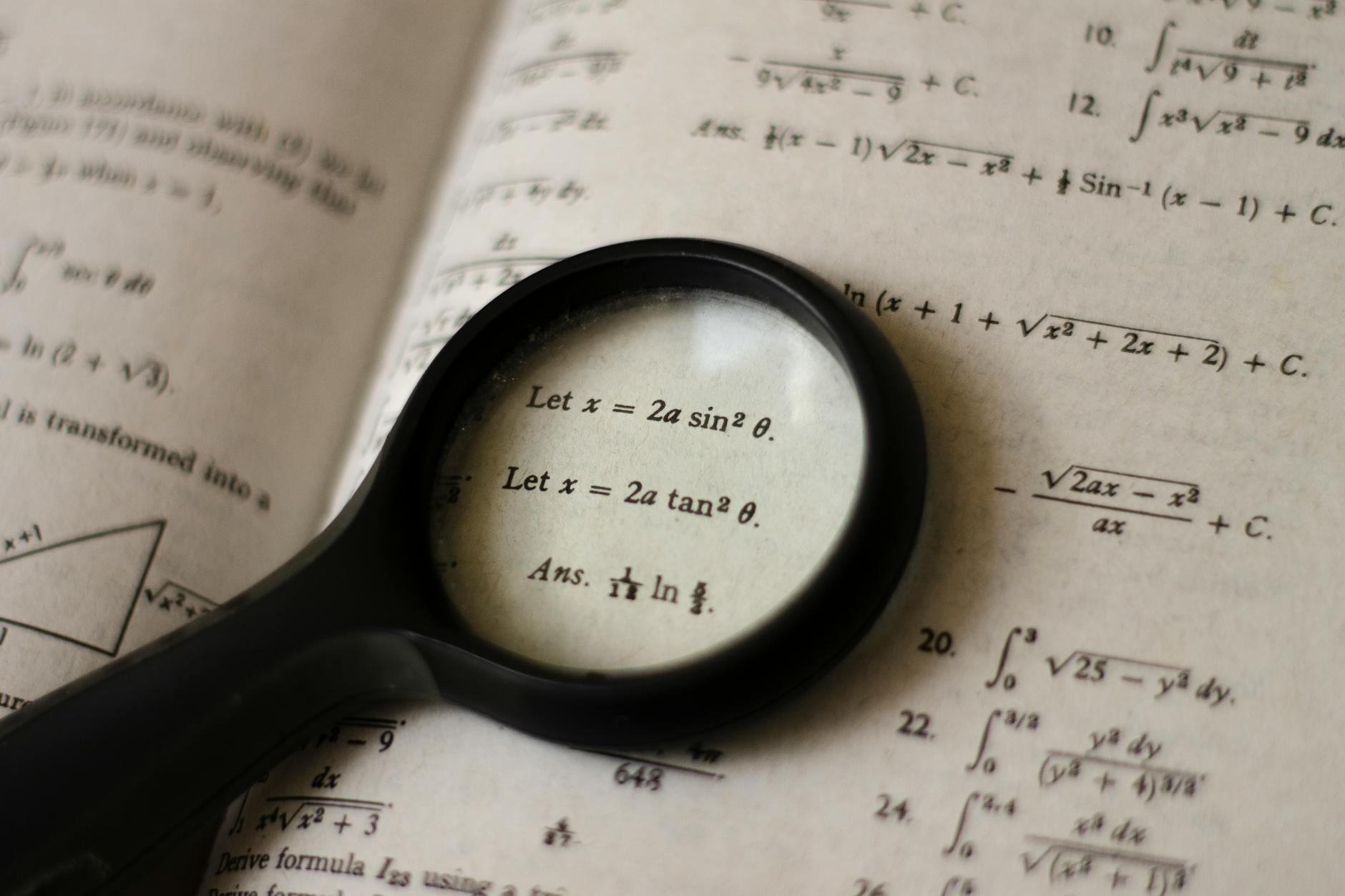
Precalculus feels hard because it asks you to do 3 things at once: work with algebra, think in functions, and read graphs like they mean something. That shift hits hard in the first 2 or 3 weeks, and it catches a lot of students off guard. The class is not just “more math.” It asks you to change how you look at math. A lot of the pressure comes from speed. One week you handle function notation, the next you face trig identities, then exponential and logarithmic rules show up fast. If a student takes 4 hours a week to study, that sounds decent, but it only works if those hours go to active problem-solving, not rereading notes.
The people who struggle most usually know some algebra but have not built the habit of checking domain, intercepts, and graph behavior every time. A strong precalculus base matters because calculus, statistics, physics, and engineering math all lean on it. If the function idea feels shaky, the rest of the course starts to wobble. That is why Precalculus study tips have to focus on skill-building, not just memorizing formulas. In this article, I’ll show the topics that matter most, the mistakes that derail grades, and the prep habits that actually stick.
Why Precalculus Feels Like a Leap
Precalculus feels hard because it asks for fluency, not just right answers. A student can know how to factor a polynomial and still freeze when the same idea shows up inside a function, a graph, or a trig expression. That jump shows up fast in 2-semester or 1-quarter college schedules, where every week brings a new layer.
The catch: Most students think the class gets harder because the numbers get uglier. That misses the real shift. The work asks you to connect 3 views at once: algebra, graphs, and rules. If a problem has a domain restriction or an asymptote, you need to notice it before you calculate.
A 35-year-old paramedic studying after 12-hour shifts has a different problem than a full-time student with 15 study hours a week. The paramedic needs short sessions, 20 to 30 minutes each, and those sessions should hit one topic at a time. The full-time student can handle longer sets, but both need to do more than watch videos. Precalculus rewards active work because the class keeps changing shape.
The course also sits on the road to calculus and other college math. That makes every weak spot expensive. If a student misses function composition in October, that same gap can wreck limits or derivative rules later, so the smart move is to fix gaps early instead of waiting for the midterm.

The Topics Students Must Master
A solid precalculus class usually covers 5 big topic groups, and each one asks for a different skill. If a student can explain the rule, solve the problem, and graph the result, the topic is sticking. If not, the same mistake tends to repeat on quizzes and the final.
- Functions: know domain, range, notation, and composition. Function notation trips students because it looks like bookkeeping, but it actually tells you how inputs and outputs relate.
- Polynomial expressions: factor, expand, and find zeros. A 3-term polynomial can look simple, yet missing one sign flips the whole answer.
- Rational expressions: simplify, find restrictions, and locate asymptotes. The 1 biggest trap is forgetting excluded values before simplifying.
- Trigonometry: use sine, cosine, tangent, unit-circle values, and identities. Memorizing 1 formula at a time helps less than seeing how the identities connect.
- Exponential and logarithmic functions: switch between forms and solve growth or decay problems. Logs confuse students when they treat them like ordinary multiplication instead of inverse operations.
- Graphing: read intercepts, shifts, symmetry, and asymptotes from the picture. A graph is not decoration; it is the answer in another form.
- Transformations: stretch, shift, and reflect graphs by hand. Students often miss how a negative sign or parenthesis changes the whole graph.
Common Mistakes That Derail Progress
The most common errors are small at first and ugly later. A student mixes up f(x) with f of x, then misses a composition step, then loses points on 4 problems in a row because the same input rule keeps showing up. That pattern matters more than one bad quiz.
Domain and range cause a lot of damage too. If a rational function has a denominator of x-3, then x=3 never belongs in the domain, and the student needs to write that down before any algebra starts. Do that every time, because one missed restriction can cost the whole problem, not just a point.
Reality check: Most prep guides treat graphs like pictures, but graphs act more like contracts. A curve tells you where values go, where they stop, and how fast they change. If you only sketch the shape, you miss the meaning.
A homeschool senior taking 3 CLEPs in one summer cannot afford to let trig identities blur together. One sloppy week turns into 3 lost practice sets, and that leaves less time for the final review. Catching the error on day 2 matters because a 90-minute exam leaves little room to recover from repeated mistakes.
The Complete Resource for Precalculus
TransferCredit.org has a full resource page built for precalculus — covering CLEP/DSST prep with chapter quizzes and video lessons, plus the ACE/NCCRS-approved backup course if you do not pass the exam. $29/month covers both, and credits transfer to partner colleges.
Browse Precalculus Course →Precalculus Study Tips That Work
Good study habits matter more in precalculus than in a class where every problem looks the same. A student who studies 30 minutes a day for 6 days usually learns more than someone who crams 4 hours the night before. The reason is simple: this course rewards pattern recognition, and pattern recognition grows through repetition, correction, and recall. When the work mixes functions, trig, and graph shifts in one set, the brain starts to sort the pieces faster. That is why Precalculus study tips should focus on doing, not just looking.
- Use spaced practice 4 or 5 days a week, not one long cram session.
- Keep an error log and write the exact step where you missed each problem.
- Mix 3 topic types in one set so your brain does not coast on sameness.
- Do 10 minutes of active recall before checking notes or solutions.
- Sketch graphs by hand; a 2-inch drawing can expose a wrong shift or asymptote fast.
- Use office hours or tutoring within 48 hours of a bad quiz, while the mistake still feels fresh.
How to Prepare for Exams
Exam prep works best when you start with the class map, not random review. A 50-question test can hide 3 or 4 high-value topics that show up again and again, so your job is to find those first and spend time where the points live.
- Review the syllabus and note every unit, test date, and formula sheet rule. If the class uses 6 units, mark the 2 that carry the most homework and quiz points.
- Build a one-page formula and identity sheet, then rewrite it from memory 3 times. That turns the sheet into recall practice instead of decoration.
- Use a textbook, past quizzes, and 20 to 30 practice problems under timed conditions. If the exam lasts 75 minutes, practice with a clock and stop at 75.
- Check each missed problem and label the error: setup, algebra, graph reading, or identity. This helps you attack the real weak spot instead of guessing.
- Spend the last 24 to 48 hours on graphing, trig values, and any rules your teacher repeats. Those areas often decide whether a score lands near the pass line or just below it.
How Precalculus Supports Credit and College Math
Precalculus does more than prepare you for the next math class. It also supports physics, statistics, chemistry, and any course that uses formulas, graphs, or functions. A student who can read transformations and solve equations cleanly usually has a smoother start in college-level math, especially when a class moves fast in 15 weeks.
If your school offers placement tests, dual enrollment, AP credit, or a CLEP route tied to precalculus or college algebra, check the policy before you register. Look for 3 things: whether the school accepts the exam, whether it grants 3 or 4 credits, and whether those credits count toward your major or only as elective hours. That last part matters a lot, because 3 credits that do not fit your degree plan do not save time.
A community-college transfer student with a fall registration deadline in August should check the registrar, the department page, and the transfer equivalency guide before spending money on any test. If the school posts a 30-credit transfer cap on exam credit, that number should change the plan right away. Use the cap to decide which class or exam gives the best payoff, not just the easiest path.
One opinionated take: the best precalculus students do not try to memorize every trick. They learn 5 or 6 durable rules and apply them cleanly. That approach looks slower in week 1, but it usually beats frantic memorization by the time the final arrives.

How TransferCredit.org Fits
Frequently Asked Questions about Precalculus
Precalculus feels hard for a lot of students because it mixes algebra, functions, trig, and graphing in one course. A single class can move from polynomial expressions to logarithms in 1 week, so if you still mix up slope, exponents, or domain, the pace feels brutal.
The most common wrong assumption is that precalculus means memorizing a pile of formulas. It actually means learning how functions behave, especially how a graph changes when you shift, stretch, or reflect it, and that takes practice with 10 to 20 problems per topic, not just rereading notes.
If you miss precalculus basics, calculus gets much harder fast. A weak grip on functions, trigonometric identities, or rational expressions can turn limits and derivatives into guesswork, so you should fix those gaps before you start a calculus unit.
This hits students who have shaky algebra from Algebra 2, uneven trig skills, or long gaps since their last math class, and it usually bothers them more in a 16-week semester than in a slower review course. Strong algebra students who already graph well usually adjust faster.
Use Precalculus study tips that focus on doing problems, not just reading examples. Start with 5 function problems, 5 trig problems, and 5 exponent or log problems a day, then check every mistake and write down the exact step where you went off track.
Most students reread notes and hope the formulas stick, but that rarely works in a class with 6 major topic areas. What actually works is mixed practice: algebraic manipulation, graphing, and word problems in the same 30-minute session so your brain learns when each rule applies.
What surprises most students is that graphing matters as much as algebra. You can know the formula for a rational function and still miss the asymptote, intercepts, or end behavior, so you should sketch graphs by hand before you rely on a calculator.
Start by taking a 20-question diagnostic on functions, polynomials, trig, exponentials, and logs. That gives you a clear list of weak spots, and you can spend 2 or 3 study blocks fixing the worst one first instead of studying everything at once.
Precalculus study tips matter because even a 90-minute exam can cover 5 or 6 big idea types, and one careless sign error can sink a problem set. If you want transferable credit, check whether your school accepts dual enrollment, CLEP, AP, or an ACE-recommended course before the term ends.
The most common wrong assumption is that a graphing calculator can save you from learning the math. It can't, because many tests ask you to explain the shape of a graph, solve with algebra, or choose the right trig identity without calculator help.
If you skip rational expressions, exponentials, or logs, you can lose points on 2 or 3 easy questions and then miss the harder ones that depend on them. That hurts especially on final exams, where one topic often feeds another and a small mistake spreads fast.
Final Thoughts on Precalculus
Precalculus gets labeled “hard” because it asks for a new kind of discipline. The class does not reward last-minute guessing very often. It rewards steady work, clean notation, and a habit of checking every answer against the graph, the domain, and the rule behind it. The good news: the hardest parts show up early and repeat often. Once a student learns to handle functions, rational expressions, trig identities, and exponentials without panic, the rest of the course starts to look familiar. That is a big shift, and it helps in calculus, physics, statistics, and other college math classes that assume the same habits. A 15-week semester gives enough time to turn this around, but only if the student starts now. Review 1 weak topic tonight, do 5 mixed problems tomorrow, and check the next quiz before the grade slips again. Precalculus study tips work best when they turn confusion into a routine.
The way this actually clicks
Skip step 3 and the whole thing is wasted.
Ready to Earn College Credit?
CLEP & DSST prep + ACE/NCCRS backup courses · Self-paced · $29/month covers everything