
Three lab sciences can finish a general-education requirement and still move a biology major toward med-school readiness. Biology, Chemistry, and Physics 1 are a strong trio because they cover cells, reactions, and forces in a sequence that supports later upper-level work instead of just checking boxes. For a pre-health student, that matters because admissions committees and advisors both look for coherence: one course should reinforce the next. This plan is not about taking random science credits; it is about choosing a sequence that builds vocabulary, lab habits, quantitative thinking, and confidence before anatomy, physiology, or organic chemistry arrive. The right order also depends on your schedule. A student with 6 credits left, a part-time job, and one open semester can use this structure to avoid overload, especially if labs and exams land in the same month. If you are trying to finish a science gen-ed plan while staying on track for a biology degree, the goal is simple: pick courses that satisfy requirements now and reduce friction later.
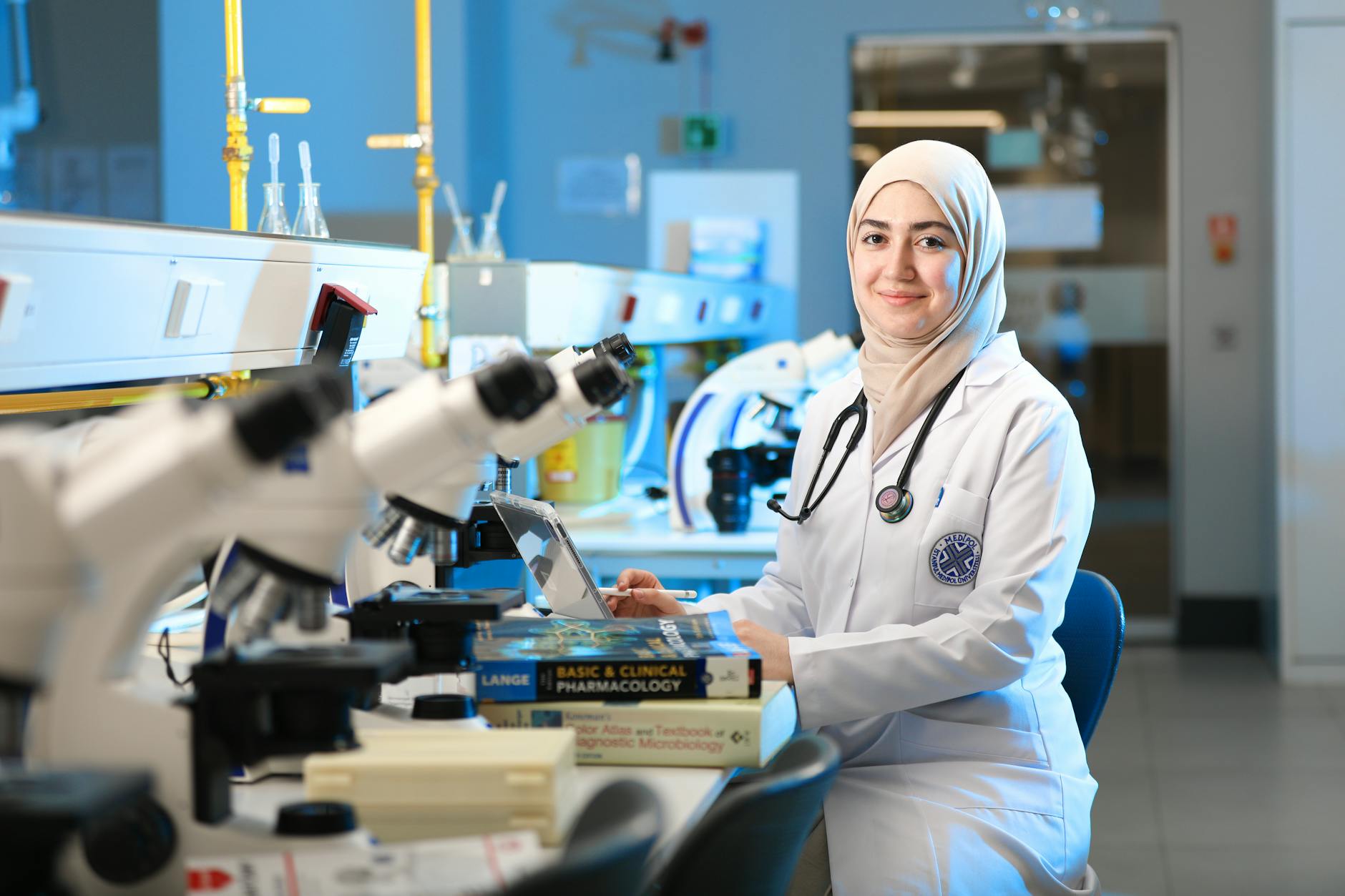
Why This Science Gen-Ed Plan Fits
For a biology major on a pre-health track, this sequence works because it covers the three main language sets of science: living systems, matter, and motion. Biology gives you vocabulary for cells and genetics, Chemistry teaches structure and reaction logic, and Physics 1 strengthens measurement and problem-solving. Together, they satisfy many 3-course science requirements while building the habits used later in anatomy, microbiology, and physiology.
The catch: the value is not just credit hours. If your school awards 3 or 4 credits per course, you should map those credits to the exact graduation and transfer rules before you register. A 12-credit science block can look complete on paper but still miss a lab rule, so check the catalog and confirm whether each course needs a separate lab component.
A concrete situation: a 35-year-old paramedic studying after 12-hour shifts may need one course per 8-week term rather than stacking all three at once. If that student has 10 hours a week, they should choose the course with the clearest weekly rhythm first, then schedule the next class around shift patterns and exam dates. A community-college transfer student aiming for a fall deadline should do the same by working backward from registration dates, not from the calendar year.
This plan also fits because it builds toward later coursework without wasting effort. A student who finishes Biology, Chemistry, and Physics 1 with solid grades is better prepared for lab-based classes that expect 1-2 hours of prep for every 1 hour in lab. That ratio should guide your weekly calendar, not your motivation level. If a course needs 6 hours of study, block those 6 hours before adding extras.

What Each Course Adds to Your Degree
These three classes do different jobs inside the same degree plan. Biology builds content memory and terminology, Chemistry develops reaction thinking and calculations, and Physics 1 trains you to model systems with formulas and units. The comparison below shows why all three matter for a pre-health biology path.
| Course | Main focus | Lab and workload | Best downstream use |
|---|---|---|---|
| Biology | cells, genetics, evolution | microscopy; weekly reading | anatomy, microbiology |
| Chemistry | atoms, bonding, reactions | calculations; 2-3 hr labs | organic chem, biochem |
| Physics 1 | motion, forces, energy | math-heavy; problem sets | physiology, biomechanics |
| Typical pacing | 1 term each | 8-16 weeks | 3-4 credits per course |
| Common challenge | memorization | precision | unit conversion |
Worth knowing: the hardest course is not always the one students fear most. Most prep time is usually lost to Chemistry because small calculation errors compound fast, so use a formula sheet from day one and review units after every problem set. If your school offers 8-week terms, reserve Chemistry for a lighter work month.
The Best Order for Taking Them
The best sequence depends on your comfort with math and your semester load. A smart plan usually starts with the course that creates the fewest obstacles, then adds the more technical class after your study system is working.
- Start with Biology if you need an easier on-ramp. It is often the best first step for students who want a 3-credit science course with less algebra and more memorization.
- Take Chemistry first if you are already comfortable with equations and unit conversion. If your school expects a lab every week, choose a term with at least 1 free evening and no other heavy STEM class.
- Schedule Physics 1 after you have warmed up your study habits. Its problem sets can take 2-4 hours a week, so avoid pairing it with another math-intensive requirement unless you already have strong time blocks.
- Leave 1 semester between Chemistry and Physics if possible. That gap lets you recover from lab reports, especially when each course includes 10-15 graded assignments.
- If you are trying to finish quickly, pair Biology with a lighter humanities requirement and keep Chemistry or Physics as the only technical class in the term. A student with 12 credits total should protect at least 5 hours a week for science review.
Bottom line: sequence matters less than balance. Pick the order that matches your current skill set, then protect the study time each class actually demands.
The Complete Resource for Science Gen Ed
TransferCredit.org has a full resource page built for science gen ed — covering CLEP/DSST prep with chapter quizzes and video lessons, plus the ACE/NCCRS-approved backup course if you do not pass the exam. $29/month covers both, and credits transfer to partner colleges.
Explore TransferCredit.org →How to Balance Labs and Lecture
Three lab sciences can feel manageable at first because each course is only 3 or 4 credits, but the real load is in the hidden hours. A single lab report may take 90 minutes, and a weekly quiz can add another 30-45 minutes of review. If you are taking 2 other core classes, treat science as a fixed appointment, not flexible homework.
A 35-year-old paramedic with 5 hours of weekly study time should not try to cram all three subjects into one month. That student should assign Biology to the term with the calmest shift schedule, then use one 45-minute block for lecture notes and one 60-minute block for lab prep. If the course fee is $93-150 at your institution, you should compare that cost with the number of hours you can realistically study so you do not pay for a class you cannot finish well.
Reality check: many students overstudy the easiest topics and underprepare for the exam formats that decide the grade. If a unit only makes up 10% of the course, cap your review there and shift the saved time to lab questions, diagrams, and practice problems. That tradeoff usually improves the final grade more than rereading chapter summaries.
When lecture and lab land in the same week, use a simple rhythm: preview before lab, review within 24 hours, and test yourself again 2 days later. That 3-step cycle keeps Biology terms, Chemistry formulas, and Physics units from blurring together.
Where Students Usually Get Stuck
Most problems show up early, often by week 3 or 4, when students realize each science asks for a different kind of thinking. Catch the warning signs fast and you can keep the whole sequence moving.
- Biology gets overloaded with memorization. If you cannot explain a diagram in 2 minutes, turn it into flashcards and redraw it from memory.
- Chemistry breaks down at the math layer. Missing one unit conversion can cost the whole problem, so check dimensions before you calculate.
- Physics 1 punishes skipped practice. If you wait until the exam week, 5-10 problems will not be enough to build speed.
- Lab reports stall when students copy data without interpreting it. Write the claim, evidence, and conclusion in separate passes, not all at once.
- Many students underestimate weekly reading. A 40-page chapter is not a weekend task if your course also has quizzes and lab prep.
- Test anxiety spikes when all three subjects feel mixed together. Use one notebook per course and one recurring study slot per course.
How This Plan Supports Later Courses
This sequence pays off most after the gen-ed box is checked. Biology helps with upper-level genetics and physiology because you already know the language of cells and systems. Chemistry supports biochemistry and organic chemistry by making bonding, pH, and reaction logic feel familiar. Physics 1 helps with biomechanics and some health-science prerequisites because you have already practiced vectors, forces, and units.
A student finishing this plan before a fall 2026 transfer deadline should use the last term to strengthen weak spots, not add a random extra science. If one course required 3 retakes on practice quizzes, that is the one to review before moving on. A transfer student with 2 remaining semesters should prioritize grades in the science sequence over speed, because a strong transcript helps more than a rushed one.
The bigger gain is confidence. After 1 full round of lab notes, problem sets, and exams, later classes feel less like a new language and more like a deeper version of what you already know. That matters in a pre-health path where the next courses often demand faster reading, tighter lab writing, and cleaner data interpretation. If you can handle 3 science formats now, you will enter advanced coursework with less panic and more control.
Use that advantage deliberately: keep your summaries short, your formulas organized, and your lab habits consistent. The point is not only to pass these classes, but to make the next 2 years of science easier to manage.

How TransferCredit.org Fits
Frequently Asked Questions about Science Gen Ed
This fits you if your school wants 3 lab sciences for transfer, pre-health, or a broad science gen-ed plan, and it doesn't fit you if your major only asks for 1 science with no lab. Biology, Chemistry, and Physics 1 each cover a different lab slot, so you can build a clean 3-course set.
The most common wrong assumption is that any 3 science classes count the same. They don't. A lab science like Biology 1, General Chemistry 1, or Physics 1 often fills a science-with-lab rule, while a non-lab survey class can miss the requirement.
3 courses usually cover it: Biology 1, Chemistry 1, and Physics 1. That gives you 3 separate 4-credit lab sciences at many schools, which is enough for a standard science gen-ed block or transfer package.
You can lose a full semester. If your school wanted 2 lab sciences and you took 2 non-lab classes, the registrar can reject them, and you'll still need the lab sequence later.
What surprises most students is that Physics 1 often looks harder on paper but can be the cleanest fit if your school accepts algebra-based lab science. Biology usually has more memorizing, Chemistry has more rules, and Physics 1 has more problem solving.
Check your degree audit first. Look for the exact wording: 'natural science,' 'lab science,' or '3-credit lecture plus 1-credit lab,' because that wording decides whether Biology, Chemistry, and Physics 1 all count.
Most students grab 3 random science classes, then fix the mess later. What actually works is matching the school's rule first, then picking Biology, Chemistry, and Physics 1 only if the catalog says 3 lab sciences or a 9-12 credit science block.
Yes, they can count together if your school accepts 3 separate lab sciences. The caveat is that some colleges want 1 life science, 1 physical science, and 1 lab course from a different area, so you need the catalog line, not guesses.
This fits you if you need a broad science gen-ed plan for transfer, associate degrees, or general education, and it doesn't fit you if your program already names a single required science like anatomy or astronomy. Biology, Chemistry, and Physics 1 work best when the rule says 'choose from multiple disciplines.'
The most common wrong assumption is that the lecture alone counts. It doesn't at many schools. A 3-credit Biology or Chemistry lecture can fail the gen-ed check without the 1-credit lab, so pair them before you register.
12 credits is a common total if each course comes with a 3-credit lecture and 1-credit lab. That means you should plan for 3 class blocks, not 3 easy electives, because the lab time hits your schedule too.
You can end up with credit that looks fine on paper and still doesn't satisfy the degree rule. If your school wants Biology 1 before Chemistry 1, or requires Physics 1 after Algebra 1, the wrong order can force a retake or a substitution request.
Final Thoughts on Science Gen Ed
A strong science sequence is less about collecting credits and more about building momentum. Biology, Chemistry, and Physics 1 each teach a different habit: remembering systems, solving reactions, and thinking quantitatively. When those habits stack in the right order, later coursework feels more manageable and less improvisational. The best version of this plan is the one that matches your schedule, your math comfort, and your transfer rules. If Biology helps you start, use it. If Chemistry is the course that will make the rest of the sequence easier, begin there. If Physics 1 needs the most uninterrupted time, place it in the term where your calendar is cleanest. Keep the sequence practical: verify labs, protect weekly study blocks, and choose the order that lets you finish with confidence instead of burnout.
How CLEP credits actually work
Ready to Earn College Credit?
CLEP & DSST prep + ACE/NCCRS backup courses · Self-paced · $29/month covers everything