
Most healthcare career changes do not fail because of motivation. They fail because people start with the wrong first step. A self-paced Biology I course can be a smart first move if you need a low-cost science class, a faster start, and something that can sit on a transcript. It will not get you hired on its own. It will not replace clinical hours, licensing, or hands-on training. That last part matters. A $250 course can help you build momentum, but it only works if your target school or program accepts the credit. If you want nursing, radiology, medical assisting, or another health track, Biology I gives you a foundation in cell structure, genetics, evolution, and lab thinking. That foundation helps with later classes. It does not stand in for them. A 6-week course can beat a 16-week semester when you need to move now. That speed helps a career changer who has 5 hours a week after work, not a full campus schedule. The catch is simple: the course should support a plan, not replace one.
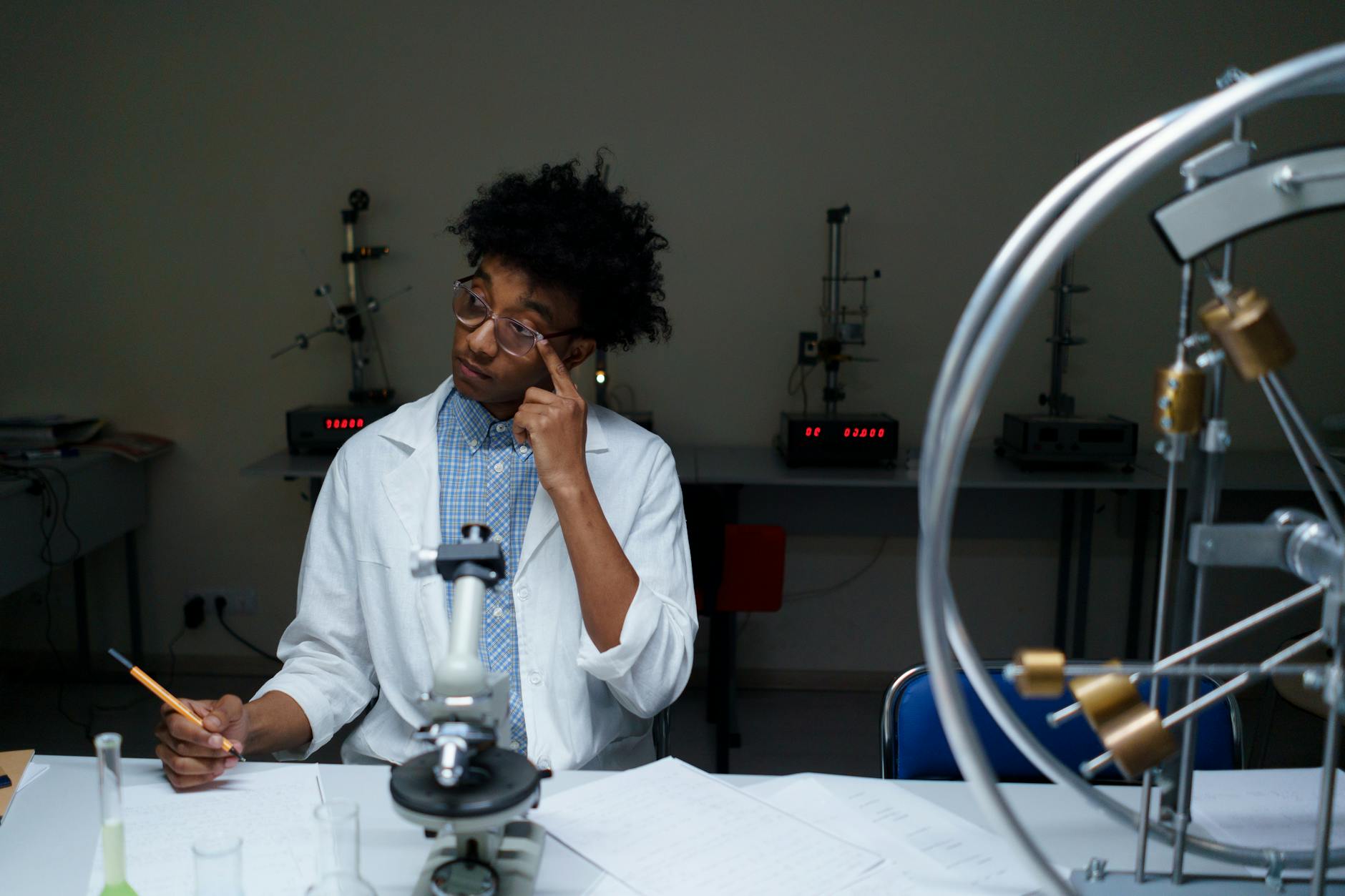
Why Biology I Fits Career Switchers
The catch: A Biology I course works best when you need a first science class, not a shortcut into a job. A $250 college-level course can give you transcriptable credit faster than waiting for a 16-week semester, and that matters when you want to start before the next term opens. Use that speed to clear a prerequisite slot or test your fit for healthcare before you spend thousands on a full program.
The upside is real. Biology I usually covers the same starter material you see in a first college science course: cells, genetics, evolution, metabolism, ecology, and scientific method basics. That gives you a base for later classes like anatomy, microbiology, or nutrition. It does not give you a license, a badge, or a clinical seat. A course can move your transcript. It cannot move you into patient care by itself.
Think about a 35-year-old paramedic who works 12-hour shifts and gets 4 study hours a week. A 6- to 8-week self-paced class fits that schedule better than a campus lab course that runs 15 weeks with fixed meeting times. That person should use the course to build momentum and check transfer rules before paying for anything else. The smart move is to match the course to one target school or one target prerequisite list, not to collect random credits.
Reality check: Employers do not hire biology credit. They hire proof that you can do the work, and that proof usually comes from a degree, a certificate, a license, or hands-on experience. Biology I helps you get one step closer, but it never replaces those things.

What Biology I Actually Covers
Biology I usually starts with the building blocks of life. You study cell structure, DNA, cell division, genetics, and how organisms use energy through metabolism. You also touch evolution, ecology, and basic lab thinking, which means reading data, spotting patterns, and asking what a result actually shows. Those are not fancy topics, but they matter in healthcare because later classes expect you to know how living systems work.
The science is broad, not clinical. You are not learning how to read an ECG, place an IV, or calculate medication doses in this class. You are learning the terms and ideas that sit under later healthcare coursework. If a program wants anatomy and physiology, Biology I helps you get ready for it. If a program wants certification for direct patient work, this class does not fill that gap.
A community-college transfer student who wants to apply before the fall deadline should treat Biology I like a planning class, not a last-minute add-on. If the school wants a 3-credit science prerequisite, the student should finish this course before the transcript deadline and then confirm whether the receiving program wants lab science, general biology, or a specific sequence. That check takes less time than repeating a class later.
Worth knowing: Most people spend too much time trying to memorize tiny details from the first chapter. Biology I rewards pattern recognition more than brute force. Focus on cell parts, energy flow, genetics, and evolution first, because those ideas show up again in later healthcare classes and on transfer reviews.
The Complete Resource for Biology I
TransferCredit.org has a full resource page built for biology i — covering CLEP/DSST prep with chapter quizzes and video lessons, plus the ACE/NCCRS-approved backup course if you do not pass the exam. $29/month covers both, and credits transfer to partner colleges.
Browse Biology I Course →What TransferCredit Biology I Gives You
A self-paced Biology I course makes sense when you want college-style science without waiting for a full term or paying for a full campus load. TransferCredit’s Biology I option sits in that lane. It gives you a flat-price path, an ACE/NCCRS-recommended course format, and a way to keep moving if you need credit on a timetable that fits work, childcare, or shift changes. The point is not speed for its own sake. The point is speed with a transcript-friendly result.
- Flat course price: about $250 per course, not a semester tuition bill.
- Self-paced format: start and finish on your timeline.
- ACE/NCCRS recommendation: built for schools that review alternative credit.
- Optional transcript consolidation: Excelsior University OneTranscript can place credits on one transcript.
- Best use: first science credit, not a substitute for clinical training or licensure.
Bottom line: The value sits in the combo, not the sticker price alone. A flat $250 course helps when a traditional 3-credit class costs far more and runs on a fixed 12- or 16-week calendar, but you still need to confirm how your target school treats ACE or NCCRS credit. Use the course to earn credit and keep your plan moving, then line up the next step before you stop studying.
Cost and Timeline: Degree, Bootcamp, Course
A single Biology I course, a full healthcare degree, and a short bootcamp solve different problems. The course gives you a cheap first step. The degree gives you a full credential. The bootcamp or certification gives you a faster job-focused skill set, but it may not cover the same science base. Compare the timeline before you spend money, because the cheapest start is not always the fastest finish.
| Path | Typical Cost | Typical Timeline | What It Gives You |
|---|---|---|---|
| Biology I course | About $250 | 6-10 weeks | College-level science credit |
| Traditional degree path | Thousands to tens of thousands of USD | 1-4 years | Full credential, broader course load |
| Healthcare bootcamp/certification | Typically $500-5,000+ | 4-24 weeks | Job-specific training or exam prep |
| Clinical license track | Varies by school and state | Months to years | Formal eligibility for patient work |
A $250 course gets you in motion fast, and that matters if you need one science credit before a larger program. A degree takes longer, but it carries more weight for hiring and promotion. A bootcamp can move faster into job skills, but it often skips the biology base that some healthcare programs still ask for.
When Biology I Is Worth Taking
A Biology I course makes sense when you want one practical step, not a whole new career in a month. If you have 5 to 10 hours a week, this can fit. If you want a healthcare job by next Monday, it will disappoint you.
- Take it if you need a first science credit before applying to a nursing, radiology, or allied-health program.
- Take it if you are rebuilding a transcript and want a lower-cost 3-credit start.
- Take it if your target school accepts ACE or NCCRS credit and you want to move before the next term deadline.
- Take it if you work shifts and need a 6- to 8-week course instead of a fixed 15-week class.
- Skip it if you want immediate employability, because biology credit alone does not produce a license or a badge.
- Skip it if you need hands-on practice right now, since no online science course can replace clinical hours.

How TransferCredit.org Fits
Frequently Asked Questions about Biology I
$250 gets you one self-paced Biology I course, not a license, not a bootcamp, and not a job guarantee. It can help you show basic science knowledge for a healthcare track, especially if you're starting from zero or fixing a weak transcript.
You waste time and money if you treat it like a full career fix. Employers in healthcare still want hands-on experience, and many roles also need a degree, a state license, or a certification like CNA, EMT, MA, or phlebotomy.
Start by checking the exact role you want, then compare its school, license, or certification rules. A 2-year allied health program, a 1-semester prerequisite, and a $250 Biology I course solve different problems.
No, Biology I alone isn't enough. It helps with prerequisites for nursing, medical assisting, radiology, and other health programs, but most real job paths also need clinical hours, background checks, immunizations, and often 1-2 years of training.
The surprise is how basic it is. You usually cover cells, genetics, ecology, evolution, and human body systems, which helps with college prep, but it won't teach clinical skills like taking vitals or reading labs in a hospital.
The wrong assumption is that any biology course counts the same everywhere. A regionally accredited college may accept it for credit, but a nursing program or employer may still want a lab science, a minimum grade, or a live lab component.
Most students pile up random courses and hope that looks like progress. What actually works is picking one target role, finishing Biology I, then adding the exact next step, like A&P, CNA training, or a prerequisite package.
It helps career changers, transfer students, and adults who need a cheap science class before a bigger program. It doesn't fit someone who needs a license in 30 days or someone who wants a direct route into patient care without more training.
A flat $250 Biology I course costs far less than one semester at many colleges, which often runs into the thousands after tuition and fees. If you add a 2-year associate degree, you'll usually spend much more time and money, but you'll get a stronger credential.
You stall out if your target job needs clinical training, not just science credits. For example, a phlebotomy class, CNA program, or medical assistant certificate can matter more than a standalone biology course for hiring.
Check the job posting and write down the exact credential it asks for. Then match the path: Biology I for prerequisite credit, a bootcamp for skills, or a certification like CNA or phlebotomy when the employer wants job-ready proof.
Yes, if your first goal is low-cost prep for a future program, but not if you need immediate job entry. The caveat is simple: a $250 course can open a door, while a license or certificate gets you through it.
The surprise is that the course is only one piece of the plan. TransferCredit.org, founded in 2020, has served 50,000+ students, and its 70+ self-paced ACE/NCCRS courses can help with credit, but they don't replace experience or employer screening.
Final Thoughts on Biology I
Biology I works best as a starter class with a purpose. It gives you a real science base, a transcriptable result, and a way to move before a full healthcare program starts. It does not hand you a license. It does not replace labs, clinical hours, or experience. That honesty matters, because a lot of expensive mistakes start with a course that sounds bigger than it is. If you want a healthcare change, build the plan around one target. Pick the school, check the transfer rule, finish the science credit, then line up the next requirement. A 6- to 10-week course can fit between jobs, after night shifts, or before a fall deadline, but only if you know what comes next. A course without a next step turns into a receipt. The best move is the boring one: clear the first prerequisite, save the money, and keep your eyes on the next credential. Browse the Biology I course category and pick the option that matches your transfer plan.
How rank usually moves
Ready to Earn College Credit?
CLEP & DSST prep + ACE/NCCRS backup courses · Self-paced · $29/month covers everything