
A Chemistry I course can help you start, but it will not make you job-ready for a lab on its own. That matters if you want entry-level lab work fast, because employers in clinical, quality control, and research settings still want hands-on skill, safety habits, and proof that you can work around real tools. Chemistry I gives you the base layer. You learn atoms, bonding, stoichiometry, reactions, gases, solutions, and acids and bases. You also get basic lab-style reasoning, which helps with class prep, screening, and confidence. What you do not get from a screen is muscle memory with pipettes, balances, fume hoods, or chain-of-custody steps. That gap matters more than the price tag. A $250 self-paced course can be a smart way to test the waters, save money, and meet a prerequisite before you spend thousands on a full program. A 2-year degree or a lab certificate still carries more weight with employers because it shows repeat practice, supervised work, and often a real transcript with lab hours. If you want a lab science job, treat Chemistry I like the first rung, not the ladder.
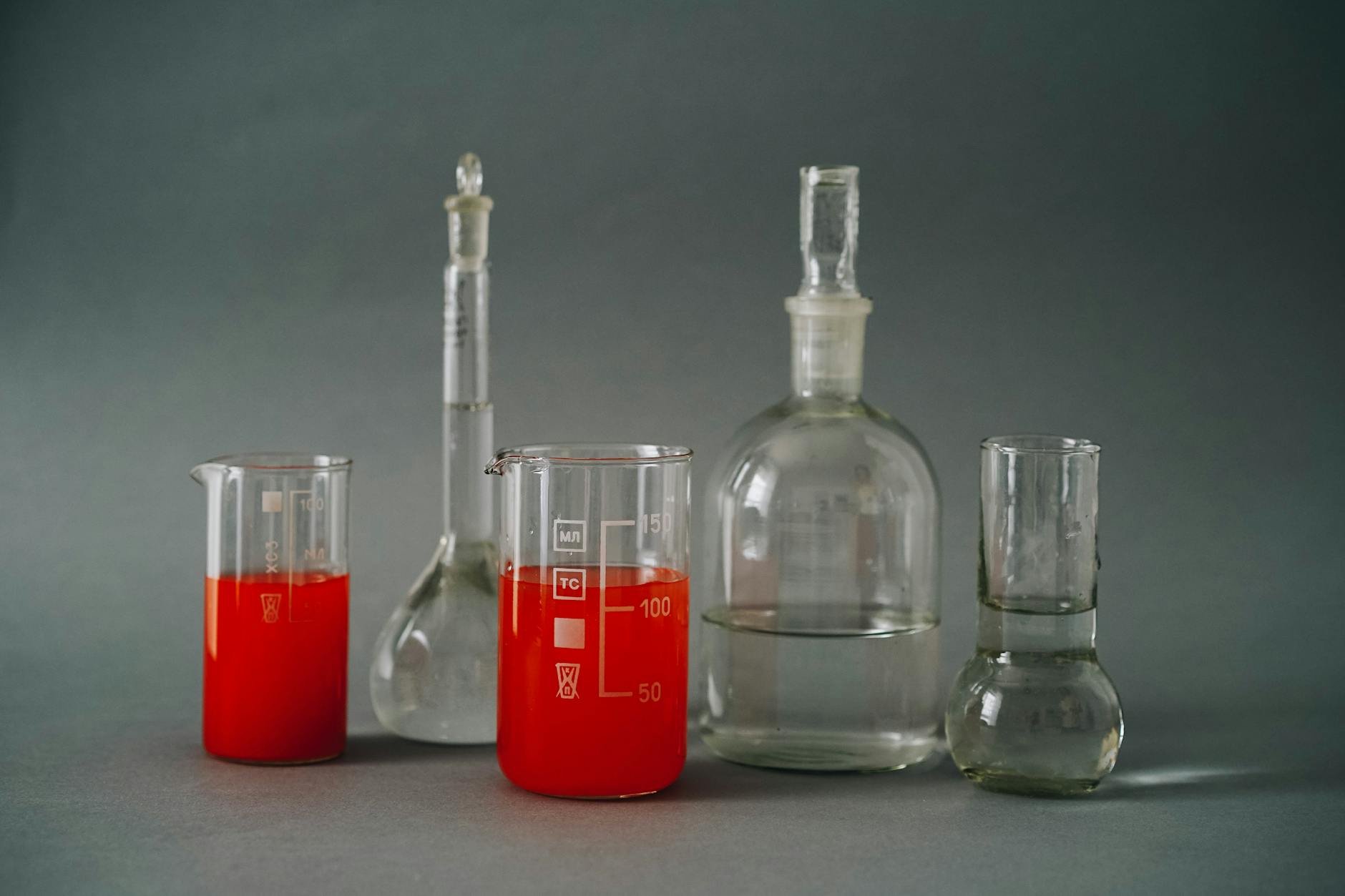
What Online Chemistry I Actually Covers
Chemistry I usually starts with atomic structure, the periodic table, chemical bonding, and measurement. A solid self-paced course also covers stoichiometry, reaction types, gases, solutions, acids and bases, and basic lab-style thinking. That mix gives you the language of the field, which matters if you want to pass a college class or stop feeling lost in a lab interview.
A good course does not stop at memorizing symbols. It asks you to balance equations, read units, track significant figures, and think about what happens when you mix 2 solutions or heat a gas. That skill set helps in any lab setting, but it still sits on the theory side. You can know that a titration should end at a certain pH and still freeze when someone hands you a burette.
Reality check: A course like this teaches the map, not the terrain. That is why employers like a candidate who can talk through molarity or limiting reagents, but they still ask about lab safety, sample handling, and error checks.
A concrete case helps. A 35-year-old paramedic with 4 hours a week after night shifts can finish a self-paced Chemistry I course in 8 to 12 weeks if the schedule stays steady. That pace makes sense before a fall registration deadline or before applying to a 2-year clinical program, because the course can clear a prerequisite without blowing up work hours. The point is not to race. It is to build enough base knowledge that the next course or lab shift feels less foreign.
The course also works best when you use it as part of a plan. If your next step is biology, anatomy, or a lab assistant program, Chemistry I gives you the math and vocabulary those classes assume. If your goal is immediate lab work, the course helps you sound prepared, but it does not replace 1 real lab schedule, 1 supervisor, or 1 safety orientation.

Which Lab Science Jobs It Can Support
Chemistry I helps most with jobs that sit near the start of the ladder, like lab aide, specimen processing helper, quality control trainee, or clinical lab assistant track. Those roles often ask for 1 science course, a high school diploma, or a 2-year degree in progress, and the course can help you clear that first screen. If an application lists chemistry knowledge plus basic math, this class can cover part of the ask.
What this means: A 1-course plan works best when the job posting asks for a science foundation, not a finished technician skill set. Read the posting like a checklist, then match the course to the piece it actually covers.
Some employers care more about confidence than depth at the first interview. If you can explain why a solution changes concentration or why contamination matters in sample handling, you sound trainable. That helps, but it does not beat 6 months of lab work or a practicum. Hiring managers still want people who show up on time, follow procedure, and keep good notes under pressure.
This is where a cheap course earns its keep, and it also shows its limit. A $250 course can save you from paying a full semester’s tuition just to find out you hate the field, but it cannot give you a portfolio. If the job wants documented bench work, you need a real lab class, an externship, or a role that gives you supervised tasks. A piece of paper alone does not prove you can move a sample without wrecking the result.
A community-college transfer student aiming for a spring lab assistant application can finish Chemistry I before the 12-week semester starts, then use the free time to line up a shadowing day or an entry-level volunteer slot. That timing helps more than cramming during the week before the deadline. Employers notice the mix of course work and real exposure.
The Complete Resource for Chemistry I
TransferCredit.org has a full resource page built for chemistry i — covering CLEP/DSST prep with chapter quizzes and video lessons, plus the ACE/NCCRS-approved backup course if you do not pass the exam. $29/month covers both, and credits transfer to partner colleges.
Browse Chemistry Courses →What Chemistry I Cannot Replace
A 1-course chemistry start gives you theory, not a full job package. That matters because a lab science hire usually needs 3 things at once: knowledge, hands-on skill, and proof that someone else already trusted your work.
- It is not a bootcamp. You do not get intensive bench practice, daily correction, or 40-hour lab weeks from a self-paced course.
- It is not a certification. Employers in clinical or research labs often look for phlebotomy, MLS, ASCP, or program-specific training, not just coursework.
- It does not teach real instrument use. A spectrophotometer, centrifuge, or pipette takes repetition, and 1 online class cannot give that repetition.
- It does not replace lab safety training. OSHA-style habits, PPE, spill response, and waste handling usually come from an actual lab or formal program.
- It does not build a portfolio. If you have 0 documented samples, 0 lab reports, and 0 supervised tasks, a hiring manager notices fast.
- It does not prove readiness for regulated work. Clinical settings often want background checks, immunization records, and 6 to 12 months of supervised exposure.
- A course score of 80 still matters less than proof of real work. Employers hire the record, not the number on the screen.
Chemistry I Costs Less Than The Usual Path
The price gap is the whole reason this path gets attention. A low-cost Chemistry I course can test your interest, cover a prerequisite, or fill a gap before you spend on a bigger program. The catch is simple: cheaper credit helps with school planning, but employers still read the resume, the transcript, and the hands-on record together. Chemistry course option fits that use case when you want a fast, budget-friendly start.
| Path | Time | Typical cost | What employers see |
|---|---|---|---|
| Self-paced Chemistry I | 8-12 weeks | about $250 | course credit / foundation |
| Traditional 1-semester class | 12-15 weeks | varies by school; often $500-$1,500+ | college transcript + lab hours |
| 2-year degree path | 18-24 months | thousands of dollars | degree, labs, supervised practice |
| Bootcamp / cert route | 4-12 weeks to 6 months | varies; often $1,000-$5,000+ | certificate, skills, sometimes externship |
Bottom line: The cheaper option wins on speed and cash, not on job proof. If you need a transcripted prerequisite, the $250 route looks smart; if you need a hire, you still need evidence beyond the course.
A Realistic Timeline From Course To Job
A real plan starts with the class, not the job board. If you want lab work, use the course to build the base, then add one more science step, one hands-on step, and one application step. That sequence beats random applications every time.
- Finish Chemistry I in 8 to 12 weeks if you study 5 to 7 hours a week. That pace keeps the material fresh and leaves room for a second course before the next hiring cycle.
- Pair it with Biology I, Biology II, or another science that the job posting names. Introduction to Biology I and Introduction to Biology II help if the role asks for broader science basics or a pre-health track.
- Add 1 hands-on exposure point in the next 4 to 8 weeks. That can mean a volunteer lab shadow day, a campus lab visit, or a short training shift where you handle samples, notes, or basic prep.
- Build 1 resume-ready proof item in the next 30 to 60 days. A short project, a lab notebook sample, or a documented task list shows you can follow directions and write clearly.
- Apply after you can point to 2 clear signs of readiness: the Chemistry I course and 1 real exposure step. If a posting asks for experience plus science coursework, do not send the same bare resume to 20 places.

How TransferCredit.org Fits
Frequently Asked Questions about Chemistry I
Check the job posting and the school or employer's science requirement first. If it asks for a lab component, clinical hours, or a specific number like 1 semester of general chemistry with lab, a lecture-only Chemistry I course won't cover that gap.
This helps you if you need affordable general chemistry knowledge, a transcripted elective, or a fast way to test the waters before a degree. It doesn't help if the job needs hands-on lab hours, an ASCP-style clinical track, or direct proof that you handled glassware, titrations, and safety in a real lab.
The common mistake is thinking 'online' means 'good enough for a lab science job.' It usually covers atoms, bonding, stoichiometry, acids and bases, solutions, and basic thermochemistry, but it doesn't replace bench work, lab notes, or a supervisor watching you run actual experiments.
Most students are surprised that the course can help with job screening even when it doesn't count as a full lab substitute. A $250 ACE/NCCRS course can give you a clean, low-cost academic start, but employers still want proof you can work in a real lab.
No, not by itself. It can make you more ready for entry-level tasks, but a lab science job usually wants more than lecture knowledge, like hands-on training, safety practice, and sometimes a degree or certificate in a related field.
About $250 for a self-paced ACE/NCCRS course versus thousands for a college class. A single community college science course with lab often runs 3 credits plus lab fees, while a full degree path can take 2 to 4 years, so the cheap course works best as a starter, not a full replacement.
You can show up underprepared for the interview, and that hurts fast. If the employer asks about pipettes, safety showers, pH meters, or sample prep and you only studied from videos, your answers will sound thin.
Most students only collect course credits and stop there. What works better is pairing the Chemistry I course with a small lab portfolio, 1 or 2 safety modules, and a resume line that shows real practice with measurements, records, or basic sample handling.
Save the syllabus, grade report, and any lab-style homework first. Then map the course to the job you want, because a lab tech role, a medical assistant role, and a transfer to a 4-year science degree all ask for different proof.
This applies to you if you're trying to lower cost, start fast, or test your interest before paying for a bigger program. It doesn't apply if the role needs a state license, a formal lab practicum, or a college that requires 4-credit chemistry with an in-person lab.
The wrong assumption is that one course can satisfy both transfer credit and hiring proof at the same time. A school may accept 2,900+ CLEP credits or 2,100+ ACE/NCCRS credits, but an employer still wants evidence that you can do the work, not just earn the credit.
Most students are surprised that the course can sit beside a $29/month CLEP or DSST prep plan instead of a pricey semester schedule. TransferCredit.org and UPI Study also offer 70+ ACE/NCCRS courses at a flat about $250 each, which can save months and a lot of tuition if you need the academic piece first.
Yes, if you use it to prove basic chemistry knowledge and then back it up with lab exposure, a portfolio, or a related certificate. It won't replace a traditional lab sequence, and it won't stand in for experience in a clinical or industrial setting.
Final Thoughts on Chemistry I
An online Chemistry I course can be a smart first move for lab science work, but only if you treat it like a starter step. It teaches core chemistry ideas, gives you a cheaper way to earn credit, and can help you meet a prerequisite before a bigger program. It does not give you lab hands, safety habits, or the kind of proof that gets a hiring manager to say yes. That is the part a lot of people miss. They buy the course hoping it will act like a shortcut to a lab job, then they get frustrated when employers still ask about experience. The course still has value. It just has a narrow job. If you want to move this into a real hire, match Chemistry I with one more science course and one hands-on step. A lab shadow day, a campus practicum, or a volunteer role can change the whole shape of your application. A 2-year degree or a formal certificate still carries more weight for many openings, but a low-cost Chemistry I course can help you start without dropping a full semester of tuition first. Use the class to build momentum, not to skip the rest of the path. Then look for the next course, the next skill, and the next opening that fits the record you actually have.
How rank usually moves
Ready to Earn College Credit?
CLEP & DSST prep + ACE/NCCRS backup courses · Self-paced · $29/month covers everything