
Physics 1 is usually less about memorizing facts and more about using 1 formula in the right place. That shift trips up a lot of students, especially if they expect it to feel like a straight facts-and-vocab class. The main topics stay pretty stable: motion, forces, energy, waves, electricity, and magnetism. Those are the parts you should study first, because they drive most of the problem sets and test questions. Chemistry often feels heavier on memory, with symbols, reactions, and rules stacked on top of each other. Physics leans harder on algebra, graph reading, and unit checks. That does not mean Physics 1 is always easier. A student who hates equations may find it rougher than Chemistry, even if the content list looks shorter. This guide stays close to the course content itself and the practical side of taking it: what shows up, who it fits, how self-paced study works, and how to get the transcript where your school wants it. One odd thing about these courses: the student who treats Physics like a memorization race usually wastes time, while the student who slows down on units and sign changes often moves faster.
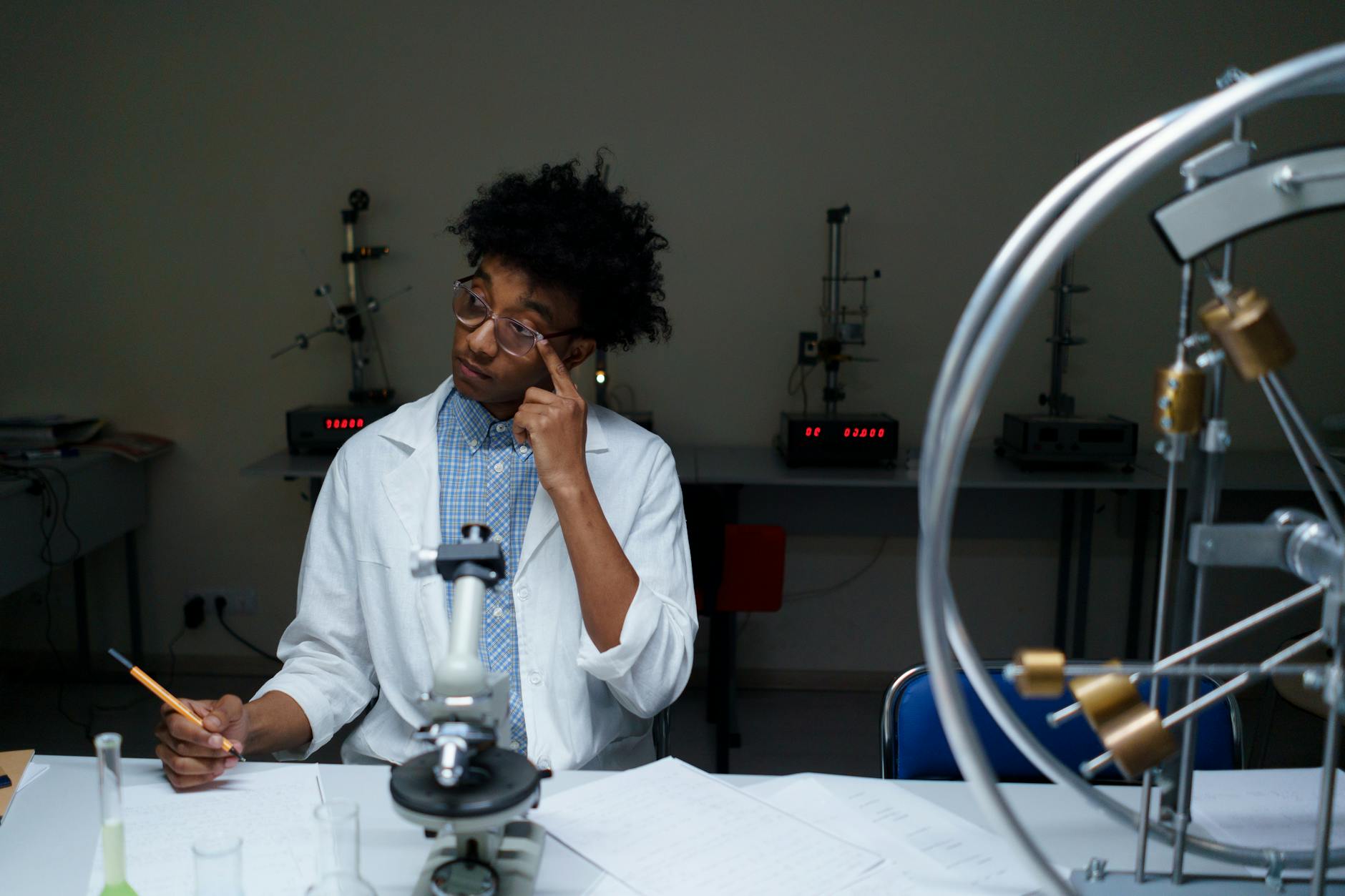
What Physics 1 Actually Covers
Physics 1 usually centers on six blocks: motion, forces, energy, waves, electricity, and magnetism. That means you work with speed, acceleration, Newton’s laws, work, power, and basic circuits before you ever get into trickier ideas. The list looks compact, but each part carries its own set of formulas and diagram skills. The catch: the course can look light on paper and still eat study time fast.
Motion usually starts with distance, displacement, velocity, and acceleration, then moves into graphs that show how those values change over time. Forces bring in free-body diagrams and Newton’s 3 laws, and that is where a lot of students lose points because they skip the picture and jump straight to the equation. Energy usually covers kinetic and potential energy, conservation of energy, and work, which means you need to track units like joules and newtons with care.
Waves add frequency, wavelength, amplitude, and speed, and those numbers connect through simple formulas that still punish sloppy algebra. Electricity and magnetism bring charge, current, resistance, voltage, magnetic fields, and basic circuit behavior. That sounds like a lot, because it is. A 35-year-old paramedic studying after 3 night shifts a week should split the course into 6 topic blocks and hit 1 block per week, not try to cram all 6 into a single weekend.
A lot of students assume Physics 1 means advanced math, but that guess misses the real problem. The course usually lives in algebra, not calculus, and the hard part often comes from choosing the right equation and keeping units straight. If a result should come out in meters or seconds and it does not, stop and fix the setup before you chase the answer. The students who do best usually build a tiny formula sheet, redo 10 to 15 problems in each topic, and check every answer against the units before moving on.

Who Physics 1 Fits Best
Physics 1 fits best for STEM-adjacent majors and anyone who needs a physical science general-education credit without locking into a lab-heavy on-campus class. Think business majors with a science requirement, pre-health students filling a gen-ed slot, engineering hopefuls testing the waters, and transfer students who need one clean science credit before a fall or spring deadline. The course rewards steady problem solving more than fast recall.
A student who already handles algebra comfortably and can keep track of units, powers of 10, and basic graph reading usually has a better shot at moving through the course without drama. If fractions, rearranging equations, or slope problems still feel shaky, spend 2 to 3 days on those basics before starting the main course work. That extra step saves time later, because Physics punishes small setup mistakes.
A community-college transfer student with a 10-week gap before fall registration can use Physics 1 as a practical fit if the school accepts the credit and the timeline stays tight. That student should start by checking the registrar’s deadline, then map study blocks across 5 to 8 weeks instead of hoping for a last-minute sprint. A homeschool senior juggling 3 CLEPs in one summer faces the same tradeoff: Physics works if the schedule leaves room for 4 to 6 hours a week, but it gets ugly if the calendar already holds two other hard subjects.
Bottom line: Physics 1 suits the learner who likes patterns, formulas, and clean cause-and-effect more than long vocab lists. That does not make it easy. It just means the course rewards a different kind of effort, and that difference matters when you only need 1 physical science credit to keep a degree plan moving.
The Complete Resource for Physics 1
TransferCredit.org has a full resource page built for physics 1 — covering CLEP/DSST prep with chapter quizzes and video lessons, plus the ACE/NCCRS-approved backup course if you do not pass the exam. $29/month covers both, and credits transfer to partner colleges.
Browse Physics 1 Course →How Self-Paced Physics 1 Works
Self-paced means you do not sit in a live 15-week class with fixed meeting times. You work through the lessons on your own schedule, then finish when you finish, which helps if your week changes by the hour. A student with 6 to 8 study hours a week can usually move faster than someone squeezing in 2 hours on weekends only, so the clock matters more than the title on the course page.
- Start with motion and forces; they show up in many later problems.
- Plan 4 to 6 study blocks a week if you want steady momentum.
- Use graph practice early; slope and area questions show up fast.
- Expect units to matter on every problem, not just the final answer.
- Build in 1 review day each week so mistakes do not stack up.
A typical completion window often lands in the 4 to 8 week range for focused students, but a busy schedule can stretch that longer. That range should guide your planning, not your ego. If you need the credit before a 30-day registration window closes, start immediately and trim the course to the highest-yield topics first. If you have 2 full months, you can space out waves, electricity, and magnetism instead of rushing them.
Physics 1 online course pages usually spell out the pace options and lesson flow, so read the structure before you commit. A self-paced course helps because you can spend 2 days on one bad concept instead of waiting for next Tuesday’s class. That flexibility matters most when work, sports, or family pull in 3 directions at once. One downside: nobody in a self-paced course will tap your shoulder when you drift for 5 days.
Why TransferCredit.org Makes Sense
A $29/month subscription sounds small until you compare it with the cost of retaking a class or missing a deadline by 1 term. That is why TransferCredit.org makes sense for students who want a lower-risk path through Physics 1 and a backup plan if the exam route does not go the way they hoped. The site pairs CLEP prep with a backup ACE-recommended or NCCRS-recognized course, so the student keeps a credit path either way.
The pass-or-free setup matters most for a student working against a 6-week window. If the exam goes well, the student moves on with credit. If the exam does not, the same $29/month subscription gives another route instead of forcing a reset. That is a practical safety net, not a slogan. Physics 1 prep through TransferCredit.org fits especially well for anyone who wants one subscription that covers both study and a backup course.
A transfer student with 1 science slot left before a spring deadline should like that tradeoff. So should a homeschool senior trying to finish 3 credits in 1 summer while balancing work, family, or another exam. TransferCredit.org also says credits transfer to over 2,000 US colleges and universities, so the student should still confirm the exact registrar policy before enrolling, but the transfer path itself stays broad. The brand shows up again here for a reason: TransferCredit.org gives a clean way to study, test, and keep moving without betting the whole term on 1 shot.
Final Thoughts
Physics 1 is hard in a specific way. It asks you to think with numbers, diagrams, and rules that connect to each other, and that can feel cleaner than Chemistry for some students and rougher for others. Motion, forces, energy, waves, electricity, and magnetism make a neat list, but the neatness hides the part that matters: you have to practice until the setup feels automatic.
If you like algebra and can stay calm when a problem starts with a graph or unit conversion, Physics 1 can be a smart physical science credit. If memorization feels easier than equation choice, Chemistry may fit your brain better, even if the title sounds scarier. Both paths reward steady work over panic studying, and both punish last-minute cramming. A student who blocks out 4 to 6 hours a week for 6 weeks will usually get farther than someone who studies 12 hours once and then disappears for 10 days.
Before you enroll, check your school’s credit rules, write down your deadline, and decide whether you need the credit for transfer, graduation, or both. Then start with motion and forces, because those topics set the tone for the rest of the course. Take the first step this week, not next month.

Frequently Asked Questions about Physics 1
The Physics 1 course covers motion, forces, energy, waves, electricity, and magnetism. You should expect algebra-based problem solving, not heavy calculus, and you’ll usually see those topics split across 6 main units, so focus your review on formulas, graphs, and units before you drill long problem sets.
Start with kinematics, then move to Newton’s laws and conservation of energy. That order helps because motion questions often show up first, and force and energy problems use the same numbers in different ways, so make one formula sheet and practice 10 to 15 mixed problems per topic.
The most common wrong assumption is that Physics 1 is just harder math, but it’s really more about setting up the right model. If you miss the diagram, the units, or the sign convention, even a simple 2-step problem can go off the rails.
If you guess wrong on Physics 1 vs Chemistry, you can waste weeks on the wrong kind of practice. Physics 1 usually asks you to reason from motion graphs, free-body diagrams, and equations, while Chemistry leans more on reactions, periodic trends, and formulas, so you need different study habits for each.
A self-paced Physics 1 course often takes 6 to 12 weeks, and that number should shape your schedule. If you only have 3 study days a week, you should aim for 1 topic per week instead of trying to finish the whole Physics 1 course in a single sprint.
Physics 1 fits STEM-adjacent majors who need a physical science gen-ed, like nursing, health science, engineering prep, or biology. It does not fit as well if your program wants chemistry-specific lab work, formulas, or reaction content, because Physics 1 focuses on motion, forces, energy, waves, electricity, and magnetism.
Most students compare the labels and stop there, but what actually works is checking the skill load: Physics 1 asks for graph reading, algebra, and force diagrams, while Chemistry asks for atomic structure, bonding, and reaction work. If you’re stronger with equations than memorization, Physics 1 usually feels cleaner.
What surprises most students is that waves and electricity can feel easier than motion at first. Motion and forces usually need the most setup, so don’t spend all your time on the later units just because they look more advanced on the syllabus.
Physics 1 is often harder if you struggle with algebra, but Chemistry can feel harder if you hate memorizing reaction rules and periodic trends. The better choice depends on your strengths, and both courses can work for a 15-week semester or a faster self-paced term.
Start by asking your school’s registrar which transcript they accept, then send the official record from the provider that issued your Physics 1 course. If your school uses an online portal, upload the transcript there; if it wants mail, send the sealed copy and keep the receipt.
Physics 1 usually centers on 6 topics — motion, forces, energy, waves, electricity, and magnetism — while Chemistry usually centers on atoms, bonding, reactions, and periodic trends. Physics 1 leans more on algebra and diagrams, Chemistry often leans more on memorization, and you should confirm both course outlines with your school before you enroll through TransferCredit.org and use the pass-or-free guarantee.
Final Thoughts on Physics 1
The way this actually clicks
Skip step 3 and the whole thing is wasted.
Ready to Earn College Credit?
CLEP & DSST prep + ACE/NCCRS backup courses · Self-paced · $29/month covers everything